Juniors & Kids Collection

Juniors & Kids

Food first. Supplementation when food can't quite reach.

  • 5 Formulations
  • 2 Age Groups
  • 100% Vegan
  • Proprietary Blends
Myra

"The best supplement for a child is the meal they actually ate. The right supplement, when needed, fills what the meal couldn't."

— Unived Formulation Standard

Curated Collections

Life Stage Stacks

Nutritional needs shift significantly with age and
biology. These curated stacks address the specific
deficiencies and physiological priorities at each life
stage.

👩

Women

Iron, folate, vitamin D, hormonal support, bone density.

Women's Stack →
👨

Men

Testosterone support, zinc, vitamin D, cardiovascular health.

Men's Stack →
👦

Juniors & Kids

Growth support, calcium, vitamin D, omega-3, age-appropriate doses.

Kids' Stack →
🧓

Seniors

B12, CoQ10, joint support, cognitive health, bone density.

Seniors' Stack →

Common Questions

Kids & Juniors supplement questions, answered.

  • Does my child actually need a supplement? Most don't. A child eating a varied diet — including fruits, vegetables, grains, and adequate protein — usually gets sufficient daily nutrition from food alone. Supplementation makes sense in specific situations: vegan or strict vegetarian diets (B12, D3, omega-3 are commonly under-supplied), fussy eaters with documented gaps (your paediatrician's input matters here), children with specific medical conditions or restricted diets, athletic adolescents whose training demands exceed their appetite, and children in regions or seasons with very low sunlight exposure (for D3 specifically). If your child eats reasonably well, looks healthy, and has normal growth markers at their paediatrician's check-ups, daily supplementation is probably unnecessary.
  • At what age should kids start taking supplements? It depends on the supplement and the reason. For most foundational nutrients (D3, omega-3), supplementation can begin from around age 4 if there's a clear reason — but consult your paediatrician for any child under 6. For protein supplementation, generally not before age 10–12 unless specifically recommended by a paediatric nutritionist; younger children typically meet protein needs through food. For hydration formulations, only when training intensity or duration actually justifies it — a 10-year-old running for 45 minutes in cool weather usually doesn't need electrolyte supplementation; a 14-year-old playing competitive sports in summer heat may. Younger is generally not better in pediatric supplementation; introduce only when there's a real reason.
  • Why is vegan D3 worth taking for my child? Doesn't sun exposure handle it? Sun exposure handles D3 production in theory. In practice, several factors limit it: most children spend much less time outdoors than they did historically (school, screens, urban environments), skin pigmentation reduces D3 synthesis (more melanin = less D3 produced from same sun exposure), sunscreen blocks UVB (which is responsible for D3 synthesis), and Indian latitudes have UVB-effective sunlight only during certain hours and seasons. The result: vitamin D deficiency rates in Indian children are reported at 70–85% in some urban populations. Ovegha D3 Kids at 600 IU matches Indian RDA and is the practical alternative when sun exposure isn't reliable. Vegan-sourced D3 (from algae) is identical to animal-sourced D3 in mechanism, but suitable for vegan or plant-based families.
  • What is Ovegha Kids, and why algae-sourced rather than fish oil? Ovegha Kids delivers EPA and DHA — the two omega-3 fatty acids most relevant for brain and visual development in growing children — from algae rather than fish. Why algae? Fish accumulate omega-3 by eating algae; algae is the original source. Algae-sourced omega-3 is vegan, environmentally lower-impact (no fish farming or wild-catch), and avoids the mercury, PCB, and other contaminants that accumulate up the food chain in fish. For families who don't eat fish (vegetarian or vegan households) or families who want to minimise contamination exposure, algae-sourced omega-3 is the better choice for children. Children eating fish regularly probably don't need omega-3 supplementation. Children who don't eat fish often benefit meaningfully.
  • Juniors Daily Nutrition — is this just a kid's multivitamin? It's a multinutrient formulation calibrated for the adolescent age bracket (roughly 12–18). Adolescents have elevated needs for several nutrients during growth phases — particularly calcium (bone growth), iron (especially menstruating teens), zinc, B vitamins, and certain micronutrients that get depleted by intense growth. A standard adult multivitamin may not match these specific needs, and a children's chewable multivitamin is often dose-light for the higher requirements of older kids. Juniors Daily Nutrition fills that middle ground. Best for: adolescents with irregular or restricted diets, vegan teens, those in growth spurts, and active teenagers. Not necessary: adolescents eating well and showing healthy development at routine check-ups.
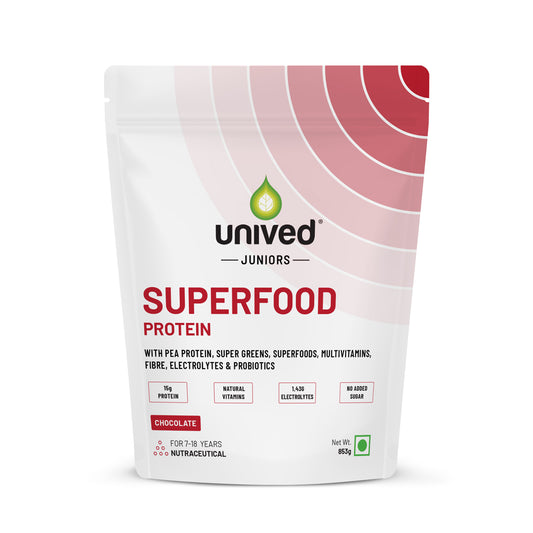
  • Juniors Superfood Protein — is protein necessary for teenage athletes? Sometimes yes, often no. Adolescents have elevated protein needs (1.2–1.5g per kg of body weight per day) — meaningfully more than middle-aged adults. Most adolescents eating mixed diets get adequate protein. Where supplementation helps: vegetarian or vegan teen athletes (plant protein is more bulky and harder to consume in adequate amounts through food alone), teen athletes training hard and not eating enough between sessions, teens recovering from injury, teens with restricted appetites. The protein itself supports growth and recovery; the supporting nutrients in Juniors Superfood Protein (typically calcium, B vitamins, iron) round out the nutritional contribution. Don't supplement a healthy adolescent who is already eating well.
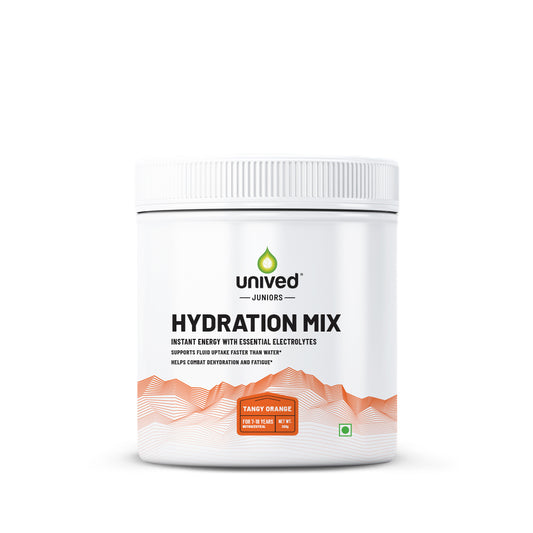
  • Juniors Hydration — when is electrolyte supplementation actually needed for kids? Electrolyte supplementation for adolescents is appropriate when training intensity, duration, or heat exposure exceeds what plain water adequately handles. Reasonable use cases: sports training of 60+ minutes, training in hot weather, multi-session training days, post-illness recovery (after vomiting/diarrhoea — but consult a paediatrician for this), and competitive adolescents doing multiple sessions per week. Inappropriate use cases: kids who don't train hard, kids during typical play or PE class, kids who would benefit more from plain water and a balanced meal. Sweetened "sports drinks" marketed to children are widely over-used and contribute to unnecessary sugar intake. Juniors Hydration delivers electrolytes without the sugar load of conventional sports drinks.
  • My child is on prescription medication. Can they take these supplements? Possibly, but consult your paediatrician first. Common interactions worth noting: omega-3 supplements with blood thinners (rare in pediatric prescriptions but worth checking), calcium with certain antibiotics, iron with certain medications, and any supplement interaction with thyroid medication. None of these are common enough to assume problems, but for any child on regular medication, the paediatrician should review supplementation before starting. The conversation usually takes 5 minutes and prevents avoidable issues.
  • Are these supplements safe for long-term daily use? Yes, when used as directed and at appropriate doses for the child's age — these are foundational nutrients the body uses daily anyway. The concern with long-term supplementation in children isn't safety of individual nutrients; it's over-supplementation through stacking multiple products, particularly with fat-soluble vitamins (A, D, E, K) that accumulate in tissues. If your child is on a multivitamin AND a separate D3 AND another product containing vitamin D, total intake could exceed safe limits. Read labels and total up doses across products. Or simpler: pick the one product that addresses your child's actual gap, and use that alone.
  • How do I know what my child is actually deficient in? Blood tests, with paediatrician guidance. For children with apparent symptoms or restricted diets, useful baseline tests include: 25-OH Vitamin D, Vitamin B12, Complete Blood Count (which catches iron deficiency anemia), and Ferritin (more specific iron stores). For children with normal growth and no symptoms, routine testing isn't necessary. For children on vegan diets, regular monitoring of B12, D3, and iron is reasonable. Don't supplement based on assumption; supplement based on either documented need or clearly understood dietary gap (e.g., vegan child needs B12; the gap is real and well-established without testing).