Strength & Performance Collection

Stronger is built in layers

Strength shows up in the lift, the sprint, the third set. But it is built somewhere else — in the daily substrates that compound over months, the acute support around training, and the cognitive layer that lets you train well in the first place. Thirteen formulations across these three layers, with the actives, doses, and forms the research actually supports.

  • 11 Formulations
  • 3 Performance Layers
  • 100% Batch Tested
  • 0 Proprietary Blends
Strength & Performance

"Strength is built in the unglamorous places. The daily scoop, the cold morning, the sixth week of consistency when nothing visible has changed yet."

— Unived Formulation Standard

✓ Third-party tested ✓ COA published ✓ No proprietary blends ✓ 100% vegan ✓ FSSAI compliant

11 products

Evidence Standard

Why we publish our evidence grades

Every product in the Sports range carries a published evidence grade — High, Moderate, or Emerging — based on the available RCT literature. We publish evidence grades even when they're Moderate, because honesty about what the science does and doesn't show is more valuable than inflated confidence.

Our Evidence Standard →

Common Questions

Sports nutrition questions, answered.

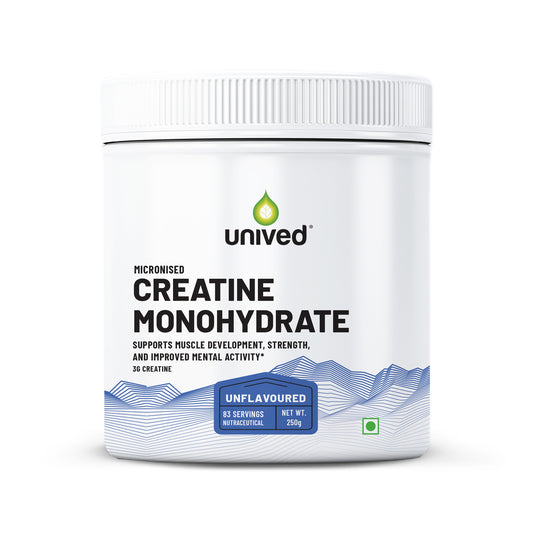
  • You have three creatines. Which one do I take? All three are creatine monohydrate — the most studied and most effective form of creatine, full stop. The choice is about how you'll take it, not about which works better. Unflavoured Creatine is the default — 3–5g of pure creatine that mixes into water, juice, your protein shake, or anything else. Lime Citrus Creatine is flavoured, designed to be taken as a standalone drink without mixing it into something else. Creatine with Electrolytes adds electrolyte support to the same creatine dose — useful for athletes who train in heat, sweat heavily, or want hydration support in the same scoop. The effect on strength, power, and lean mass is the same across all three. Pick by what you'll actually take consistently.
  • What's the difference between BCAA + Hydration and EAA + Hydration? They overlap, but they're not the same. BCAAs are three amino acids — leucine, isoleucine, and valine — that trigger muscle protein synthesis when present in adequate amounts. EAAs are all nine essential amino acids, including the three BCAAs. Current research favours EAAs as the more complete option: leucine starts muscle protein synthesis, but the other essential amino acids are needed to actually build the muscle protein. If you eat enough total protein each day, you're getting plenty of BCAAs already — adding EAAs around training is the more meaningful supplementation. So why carry both? BCAAs in a hydration matrix have specific use cases: fasted morning training, intra-workout sipping where you want some amino acid support without the fuller EAA dose, or for athletes used to BCAAs who prefer to continue with them. If you're choosing between the two and don't have a specific reason to prefer BCAAs, EAAs are the more evidence-backed choice.
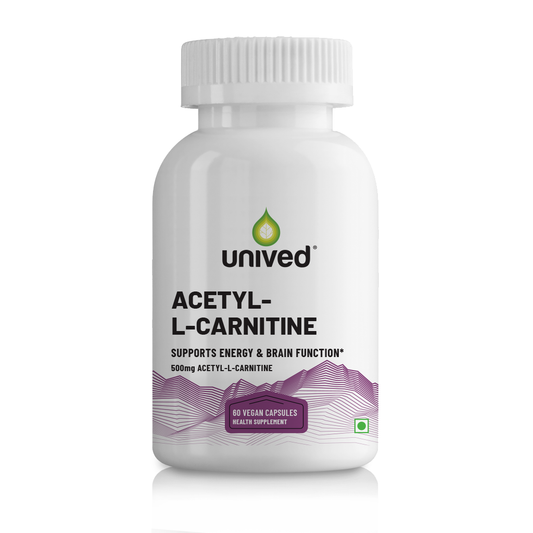
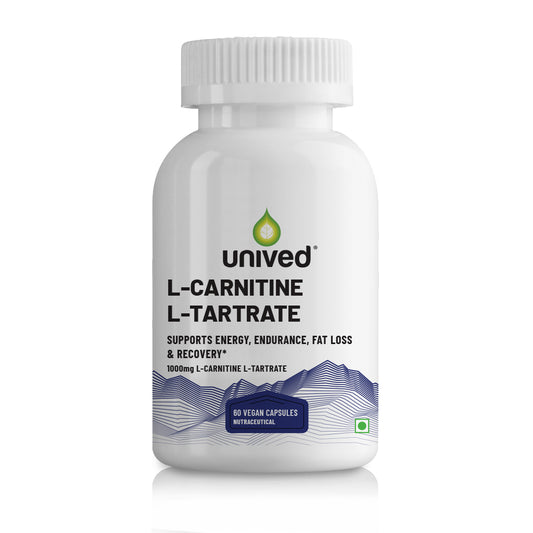
  • What's the difference between Acetyl L-Carnitine and L-Carnitine L-Tartrate? Aren't they the same thing? No — they're different actives with different uses. L-Carnitine L-Tartrate (LCLT) is peripherally active — it supports fat metabolism and reduces muscle damage markers after high-intensity training. Acetyl L-Carnitine (ALCAR) crosses the blood-brain barrier, which the L-tartrate form does not — it supports cognitive focus, mental energy, and mitochondrial function in neural tissue. If you're training hard and want recovery support, LCLT is the right one. If you want cognitive sharpness and mental performance support alongside training, ALCAR is the right one. Most athletes don't need both.
  • What's the difference between Elite Performance Protein, Elite Rebuild Protein, and Elite Endurance Protein? They're built for three different uses. Elite Rebuild Protein is a complete-amino-acid post-session formulation — pea + yeast protein with 3g creatine and electrolytes built in — for strength and hypertrophy training where muscle repair is the priority. Elite Performance Protein is a daily protein for active training, designed for muscle protein synthesis across the day, not specifically tied to the post-session window. Elite Endurance Protein combines protein with carbohydrates for endurance recovery — for athletes coming off long runs, rides, or high-volume aerobic sessions where glycogen replenishment matters alongside muscle repair. Choose by what your training actually asks of you, not by the name.
  • Do I need to take creatine every day, or just before workouts? Creatine works by saturating muscle creatine stores over weeks, not by acute pre-workout effect. The standard protocol is 3–5g per day, every day, regardless of whether you're training that day. Timing within the day matters less than consistency across weeks. Some athletes start with a "loading phase" (20g/day for 5–7 days) to reach saturation faster; this is optional and not necessary. Skipping days doesn't undo progress, but inconsistent intake means you never reach the muscle saturation that produces the effect. Pick a time you'll actually remember — most people take it with breakfast or with their post-session shake.
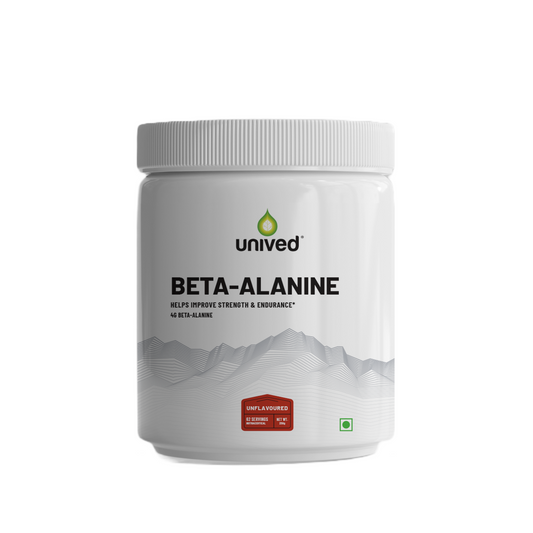
  • Is beta-alanine the thing that makes you tingle? Is that safe? Yes, that's paraesthesia — a harmless, well-documented effect of beta-alanine binding to nerve receptors in the skin. It feels strange the first few times you take it, fades within 30–60 minutes, and decreases with consistent use as your body adapts. It's not an allergic reaction and not a sign of overdose. If the sensation is uncomfortable, split your daily dose (3–6g) into smaller portions taken across the day — the effect is dose-dependent. Some athletes find it useful as a confirmation they've taken it; others find it distracting before training.
  • Do these products work for women, or are they formulated for men? All of them work for women. Creatine has been extensively studied in female athletes and shows the same strength, power, and lean mass benefits as in male athletes. Protein requirements per kg of body weight are similar across sexes for active populations. BCAAs, EAAs, beta-alanine, taurine, arginine, and the carnitines all show comparable effects. The marketing of strength supplements has historically been male-coded, but the actives and doses are the same.
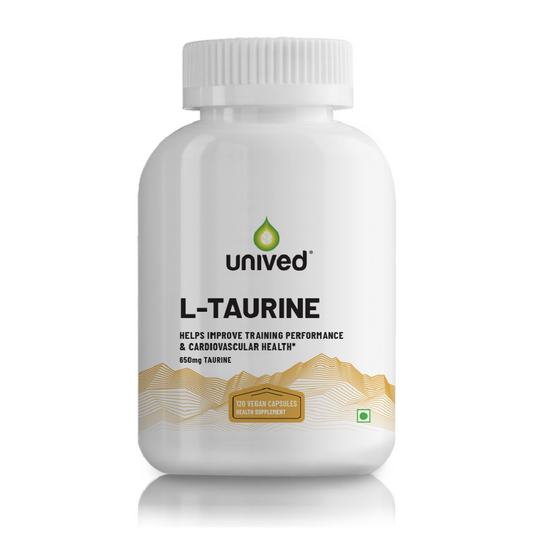
  • Can I take all of these together? What's a sensible stack? You almost certainly don't need all of them. A serious training stack usually includes: one creatine (any of the three), one daily protein (likely Performance or Rebuild depending on training type), and possibly one intra-workout product — EAA + Hydration is the most evidence-backed choice for the around-training window, or beta-alanine if you train at high anaerobic intensity. Specific additions only when you have a specific reason: L-arginine for vascular support before training, L-carnitine L-tartrate for recovery from heavy training, ALCAR for cognitive performance, taurine for endurance work. That's three to five products covering most needs. Adding more without a specific reason mostly increases cost without adding effect. Start with the foundation, add only what you can articulate a reason for.
  • Are these products WADA-compliant for competing athletes? All Unived Strength & Performance formulations are free from WADA prohibited substances, and our third-party testing protocol includes contamination screening. Athletes competing at elite level should review their sport's federation guidelines annually and confirm individual product compliance with their team physician — regulations vary by sport and by competition level.
  • How long before I see results? Depends on the product and what you're measuring. Creatine effects on power output and training capacity show up within 2–4 weeks of consistent use (faster with a loading protocol). Beta-alanine effects on anaerobic capacity show up at 4–6 weeks once muscle carnosine stores build up. Protein, BCAAs, and EAAs effects on muscle protein synthesis are session-by-session, but visible body composition changes take months and depend on training and total daily protein intake. L-arginine and acute-window products have transient session-level effects. Carnitines typically show effects at 3–4 weeks. None of these are quick fixes — strength and performance gains come from consistent training supported by consistent supplementation, not from supplementation alone.