Vitamins & Minerals Collection

The boring nutrients 
done right

Most of what your body needs every day, it cannot make on its own. That is what this category is for — the foundational vitamins and minerals that support how your body actually functions, taken at evidence-backed doses, in forms that absorb. Twenty-nine formulations across daily essentials, life-stage-specific needs, and higher-dose products for situations where Indian diets typically fall short.

  • 25 Formulations
  • 2 Tiers (Basic & Standard)
  • 100% Batch Tested
  • 0 Artificial Additives
Vitamins & Minerals

"The foundation matters more than the addition. Most people start with the impressive supplement and miss the boring one their body actually needed."

— Unived Formulation Standard

Curated Sets

Vitamins & Minerals Bundles

Curated Collections

Life Stage Stacks

Nutritional needs shift significantly with age and
biology. These curated stacks address the specific
deficiencies and physiological priorities at each life
stage.

👩

Women

Iron, folate, vitamin D, hormonal support, bone density.

Women's Stack →
👨

Men

Testosterone support, zinc, vitamin D, cardiovascular health.

Men's Stack →
👦

Kids & Adolescents

Growth support, calcium, vitamin D, omega-3, age-appropriate doses.

Kids' Stack →
🧓

Seniors

B12, CoQ10, joint support, cognitive health, bone density.

Seniors' Stack →

Common Questions

Wellness supplement questions, answered.

  • What's the difference between Basics and Standard products? Both tiers are formulated to Indian RDA — the doses are the same. The difference is format and formulation depth. Basics products are entry-level: smaller packs (typically 30 capsules), simpler single-active or paired-active formulations, and accessible price points. They're for people starting a daily routine, trying something out, or who want the essentials without committing to a larger purchase. Standard products (no "Basics" prefix) are the fuller versions: larger packs (typically 60–180 capsules), often with co-factors or premium forms — wholefood-sourced rather than synthetic isolates, chelated rather than oxide minerals, liposomal where it improves absorption. Both lines use the same quality controls and are third-party tested. Choose Basics if you want to start; choose Standard if you've decided this is part of your daily life.
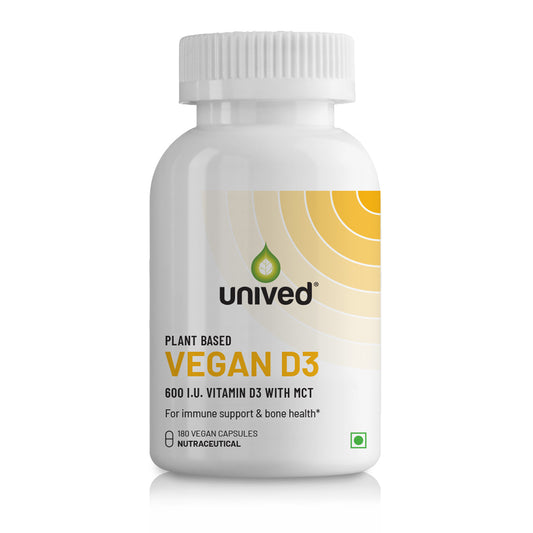
  • Vitamin D is widespread deficient in India. Which one do I take? Despite year-round sun, vitamin D deficiency is reported in 70–90% of urban Indian adults — melanin reduces skin synthesis, indoor lifestyles dominate, and outdoor exposure is often at the wrong time of day for UVB. Several options across our range cover Indian RDA daily D3 intake, with K2 paired in to direct calcium properly. Basics D3+K2-7 is a smaller pack. D3+K2-7 is the larger pack. Vegan D3 is just D3, without K2-7. Ovegha D3 Kids is for children and adolescents. If you've never had your vitamin D tested, do that first (a 25-OH vitamin D blood test, available at most diagnostic centres) — if you're below 30 ng/mL, the RDA dose alone may not correct the deficit and your physician should advise a corrective protocol.
  • Why is K2 paired with D3 in many of these products? Vitamin D helps the body absorb calcium. Vitamin K2 directs that calcium into bone rather than into soft tissue like arteries. Without K2, supplementing D3 alone risks the body absorbing more calcium than it has somewhere safe to put — a small but real concern raised in cardiovascular research. The K2 dose doesn't need to be large; co-supplementation simply ensures the calcium goes where you want it. This is why we pair them in our combination products and offer K2 standalone for athletes and adults already taking D3 from another source.
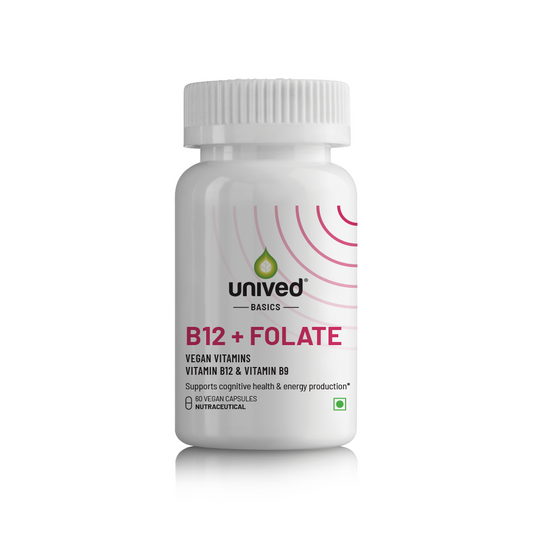
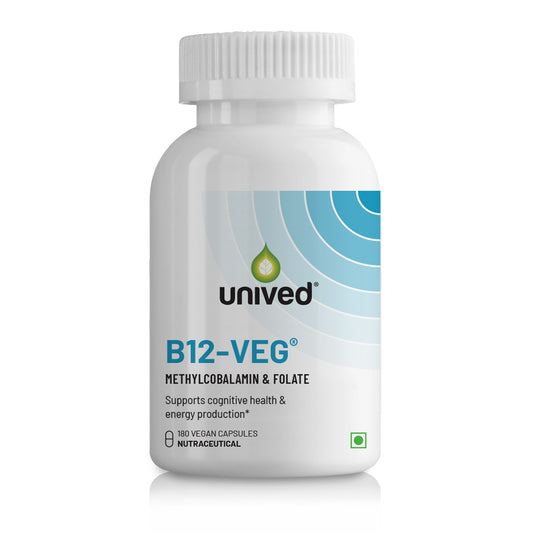
  • I'm vegan. What do I actually need to supplement? Three nutrients are commonly under-replaced in vegan diets: Vitamin B12 (almost entirely absent from plant foods — methylcobalamin form is what we use), Vitamin D3 (sun exposure plus algae-sourced D3 in winter or for indoor lifestyles), and sometimes iron (plant-source iron has lower bioavailability than animal-source). Beyond those, calcium and zinc may need attention depending on diet — Basics Plant Calcium addresses one. Vegan adults building a daily foundational stack typically need: Basics B12-Veg + Folate, Basics Vegan D3, and either an iron product (if testing shows a deficit) or attention to dietary iron paired with Vitamin C for absorption.
  • Men's Iron vs Women's Iron — what's the difference, and do I really need iron at all? They're formulated for different physiological needs. Women's Iron is for menstruating women, who lose iron monthly and have higher daily requirements (Indian RDA ~21mg). It includes co-factors (often Vitamin C for absorption, sometimes B12 and folate) that support iron utilisation. Men's Iron is a lower-dose iron for men with documented deficiency — most men do not lose iron the way menstruating women do and should not supplement iron without testing first. Iron supplementation in someone who isn't deficient can cause GI distress, oxidative stress, and in rare cases iron overload. Get a ferritin test before deciding to take iron, regardless of gender.
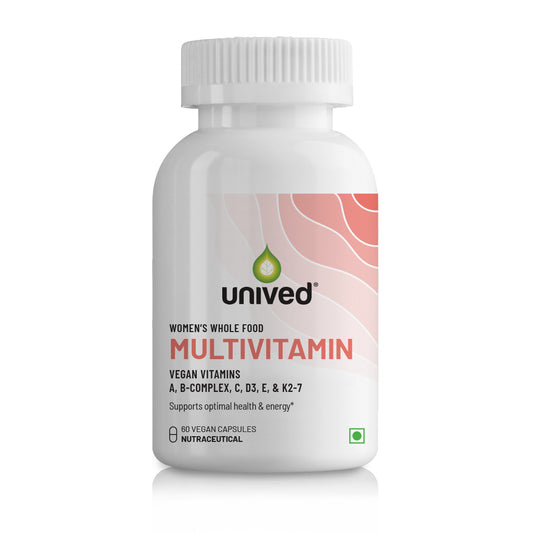
  • What's the difference between Wholefood Multivitamin and Basics MV+M? Different formulation philosophies, same RDA targets. Wholefood Multivitamin delivers vitamins and minerals from concentrated whole food sources (except B12 & B9) rather than synthetic isolates — closer to how nutrients appear in food. Generally more bioavailable, more expensive. Basics MV+M is a standard daily multivitamin and mineral formulation at Indian RDA levels — synthetic forms in researched doses, no whole-food component. Both work. The Wholefood version is for people who prefer their supplements closer to food; Basics MV+M is for people who want effective daily coverage at a lower cost.
  • Liposomal Vitamin C — is liposomal really better? Yes, meaningfully, but only for some uses. Standard Vitamin C is fine for daily maintenance — the body absorbs it efficiently at modest doses, and excess is excreted. Liposomal Vitamin C uses phospholipid encapsulation to bypass some of the absorption limits that affect standard vitamin C at higher doses — useful when you want to take a larger amount (e.g., during acute immune challenges, or alongside intensive collagen-building protocols) and have it actually reach the bloodstream rather than being excreted.
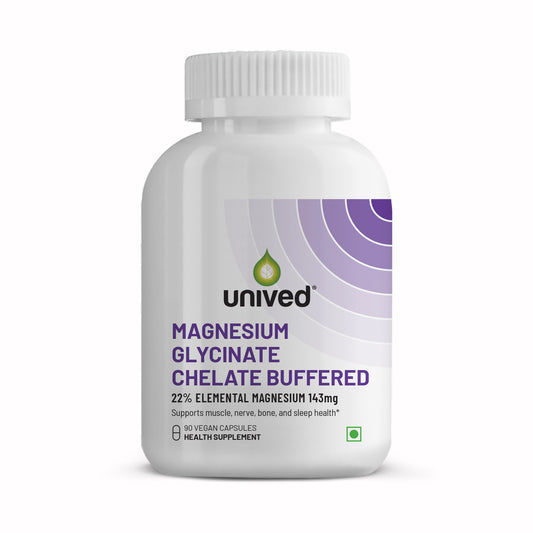
  • Why are there three different Magnesium Glycinates? Magnesium Glycinate Chelate Buffered (90 caps and 120 caps) use a buffered form of Magnesium Glycinate, and are the same formulation in different pack sizes — choose by how often you want to reorder.. Magnesium Glycinate Chelated Pure uses a fully reacted bisglycinate chelate (non-buffered), the highest-absorption form, for adults specifically targeting magnesium status (sleep quality, stress modulation, muscle relaxation, recovery from training). If you're a casual daily user, the standard Magnesium Glycinate is the right choice. If you're specifically working on magnesium status, the Chelated version is worth the upgrade. The Sports → Sleep & Recovery category has more on when each form is most useful.
  • Can I take all of these together, or will they interact? Most foundational vitamins and minerals can be taken together — that's why multivitamins exist. A few practical interactions worth knowing: Calcium reduces iron absorption (separate by 2 hours if taking both), zinc and iron compete (separate if taking both), fat-soluble vitamins (D, K, A) are better absorbed with a meal containing fat, and B vitamins are best taken in the morning because they can affect sleep if taken late. A sensible daily protocol: B-complex with breakfast, D+K with the largest meal of the day, magnesium in the evening. If you're taking ten different supplements, you probably don't need them all — speak to a practitioner or your treading doctor for guidance.
  • How do I know what I'm deficient in? Blood tests, mostly. The most useful baseline tests for adult Indians are: 25-OH Vitamin D, Vitamin B12, Ferritin (iron stores), Complete Blood Count, and Thyroid panel (TSH at minimum). These five cover the most commonly under-replaced nutrients in Indian diets and lifestyles. Your physician can order these; most diagnostic centres run them for ₹2,000–4,000 as a panel. Supplementing without testing is a reasonable approach for the well-established widespread gaps (Vitamin D in urban Indians, B12 in vegans), but for everything else — including iron — testing first prevents both over-supplementation and under-treatment of an actual deficit.