Superfoods & Adaptogens Collection

Functional superfoods & adaptogens

Beyond foundational vitamins and minerals, certain ingredients support the body in distinct ways — adaptogens that help the stress-response system adapt, and functional fats that provide a different metabolic pathway for energy. Three formulations in this category: two of the most-researched ashwagandha extracts available globally, and a concentrated medium-chain triglyceride. Each does specific work; none are general wellness.

  • 4 Formulations
  • 2 Roles (adaptive support · metabolic fuel)
  • 100% Batch Tested
  • 0 Artificial Additives
Superfoods & Adaptogens

"Adaptogens do not give you energy. They help your system spend the energy it already has, more wisely."

— Unived Wellness Standard

Curated Sets

Superfoods & Adaptogens Bundles

Curated Collections

Life Stage Stacks

Nutritional needs shift significantly with age and
biology. These curated stacks address the specific
deficiencies and physiological priorities at each life
stage.

👩

Women

Iron, folate, vitamin D, hormonal support, bone density.

Women's Stack →
👨

Men

Testosterone support, zinc, vitamin D, cardiovascular health.

Men's Stack →
👦

Kids & Adolescents

Growth support, calcium, vitamin D, omega-3, age-appropriate doses.

Kids' Stack →
🧓

Seniors

B12, CoQ10, joint support, cognitive health, bone density.

Seniors' Stack →

Common Questions

Superfood & adaptogen questions, answered.

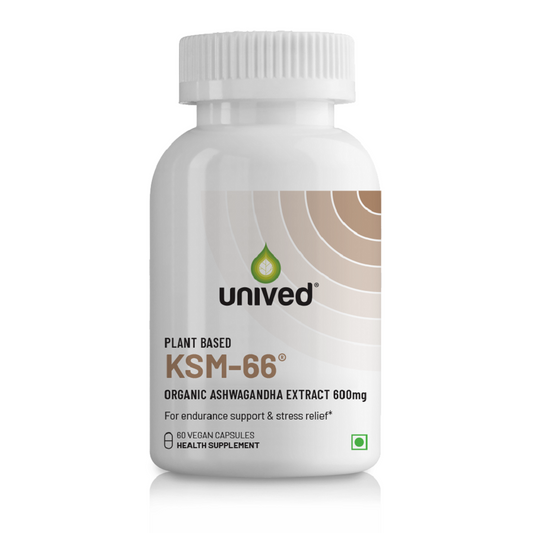
  • You carry both KSM-66 and Shoden®. Why? Both are patented, standardised extracts of ashwagandha (Withania somnifera), the adaptogenic herb used in Ayurveda for stress, sleep, and recovery support. Both have substantial clinical evidence behind them. We carry both because customers ask for each by name — KSM-66 is the most globally recognised standardised ashwagandha, with a wide body of research; Shoden® is a newer, more concentrated extract using a different standardisation approach. The choice between them is one customers should be able to make themselves — not one we want to make for them by carrying only one.
  • What's the actual difference between KSM-66 and Shoden®? Standardisation and effective dose. KSM-66 is standardised to ~5% withanolides — the classical standardisation target for ashwagandha extracts, used in the majority of published clinical trials. Typical effective daily dose: 300–600mg. Shoden® is standardised to a higher concentration of withanolide glycosides — the specific compounds most associated with stress modulation and sleep quality. Because the active concentration is higher, the effective daily dose is lower: typically 60–120mg. Same plant, different standardisation, different doses. Most people respond similarly to either — try the one that fits your preference for dose format and price.
  • What does ashwagandha actually do? Ashwagandha is an adaptogen — a herb that supports the body's ability to adapt to physical and psychological stress. Clinical research supports its role in: cortisol modulation (lowering elevated cortisol in stressed adults), sleep quality (particularly sleep onset and depth), recovery from training stress, and general resilience to physical and mental demands. It is not a sedative, not a stimulant, and not a quick-acting nutrient. Effects accrue over 4–8 weeks of consistent use. If you're under chronic stress, sleep poorly, or train hard and don't recover well, ashwagandha is one of the more evidence-backed adaptogens to consider.
  • When should I take ashwagandha — morning or evening? Either, depending on what you're targeting. Morning dosing suits adults targeting stress modulation across the day or recovery support around training. Evening dosing suits adults primarily targeting sleep quality. Some people split the dose — half in the morning, half before sleep. Ashwagandha isn't time-critical the way melatonin is; consistency across weeks matters far more than the specific hour of intake.
  • Is ashwagandha safe for daily use? Are there situations where I shouldn't take it? For most healthy adults, ashwagandha is well-tolerated for daily use. There are specific situations to be cautious about. Avoid or consult your physician first if: you have thyroid conditions (ashwagandha can affect thyroid hormone levels — meaningful for hyperthyroid patients especially), you're on immunosuppressant medication (ashwagandha can stimulate immune function), you're pregnant or breastfeeding (limited safety data), or you have autoimmune conditions. Some users experience GI discomfort, drowsiness, or vivid dreams as side effects — uncommon but real. If you're on prescription medication for thyroid, anxiety, depression, or autoimmune conditions, speak with your physician before starting ashwagandha.
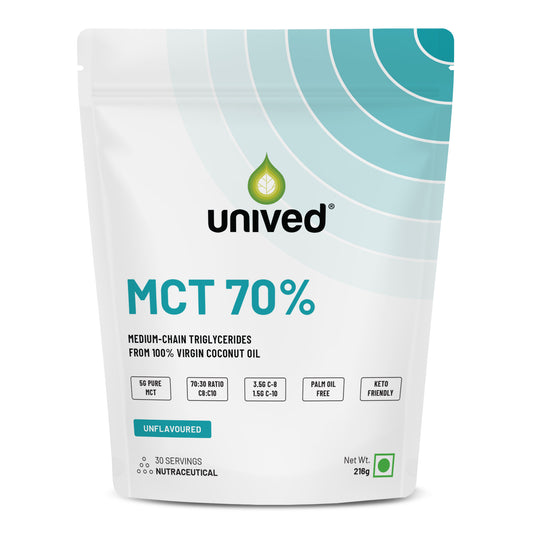
  • What is MCT 70%, and what does it do? Medium-chain triglycerides are fatty acids the body can convert to energy faster than long-chain dietary fats. They bypass some of the standard fat-metabolism pathway, reaching the bloodstream and liver more quickly to be used for energy or converted to ketones. The 70% refers to the concentration of medium-chain fats in the formulation — the rest is the carrier oil. Primary use cases: fasted morning training (energy without breaking the fast), cognitive support (the brain efficiently uses MCT-derived ketones for fuel), ketogenic dietary protocols, and athletes who specifically want to support fat metabolism alongside training. Not a daily wellness habit for most people — MCT is a tool for specific protocols, not a general supplement.
  • How do I take MCT, and what's the right starting dose? Start small — 1 teaspoon (about 5ml) once or twice a day, ideally with food or in coffee. MCTs can cause GI distress (loose stools, cramping) at higher doses, especially when first introduced. Build up to 1–2 tablespoons (15–30ml) per day over 2–3 weeks if your gut tolerates it. Common use: stirred into morning coffee (the "bulletproof coffee" pattern, often with butter or cream), blended into smoothies, or used as a cooking oil at moderate temperatures (MCT smokes at lower temperatures than other oils).
  • Are these products meant to be used together, or separately? Mostly separately, though some adults use a morning combination of Shoden® (or KSM-66) for stress-recovery support alongside MCT in their coffee for cognitive energy. That's a reasonable stack for someone in a demanding work or training phase. There's no contraindication to combining them — they work through completely different mechanisms (adaptogenic vs metabolic). Most people use ashwagandha consistently for stress/sleep support and reach for MCT during specific situations (fasted training, intense work days, ketogenic protocols).
  • Are these products WADA-compliant for competing athletes? Ashwagandha is not on the WADA Prohibited List, and MCT is a dietary fat — also not prohibited. Both are free from WADA-prohibited substances, and our third-party testing protocol includes contamination screening. Athletes competing at elite level should still review their sport's federation guidelines annually and confirm individual product compliance with their team physician.
  • How long before I see results? Different products, different timelines. Ashwagandha (KSM-66 or Shoden®) effects on sleep quality and stress modulation typically show up within 2–4 weeks of consistent daily use; cortisol changes have been measured in studies as early as 30 days. Effects compound over 8–12 weeks. MCT is felt within hours of intake — energy availability, cognitive sharpness, or satiety from fasted dosing are immediate. There's no cumulative timeline; it works each time you take it. None of these are quick fixes for chronic stress, poor sleep, or training-related fatigue — they're tools that support the systems involved, alongside diet, sleep, and the lifestyle work that does most of the actual lifting.