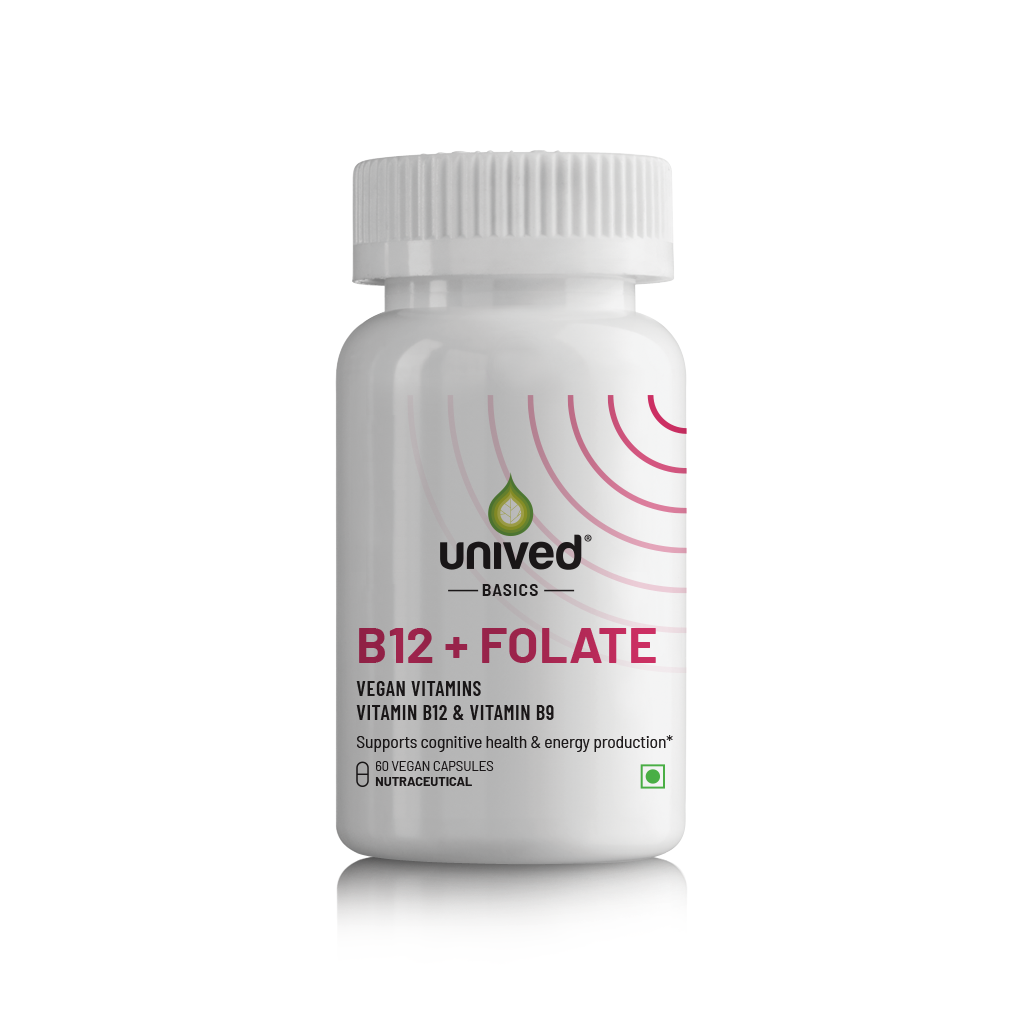
What's the difference between Basics B12 + Folate and B12-VEG®?
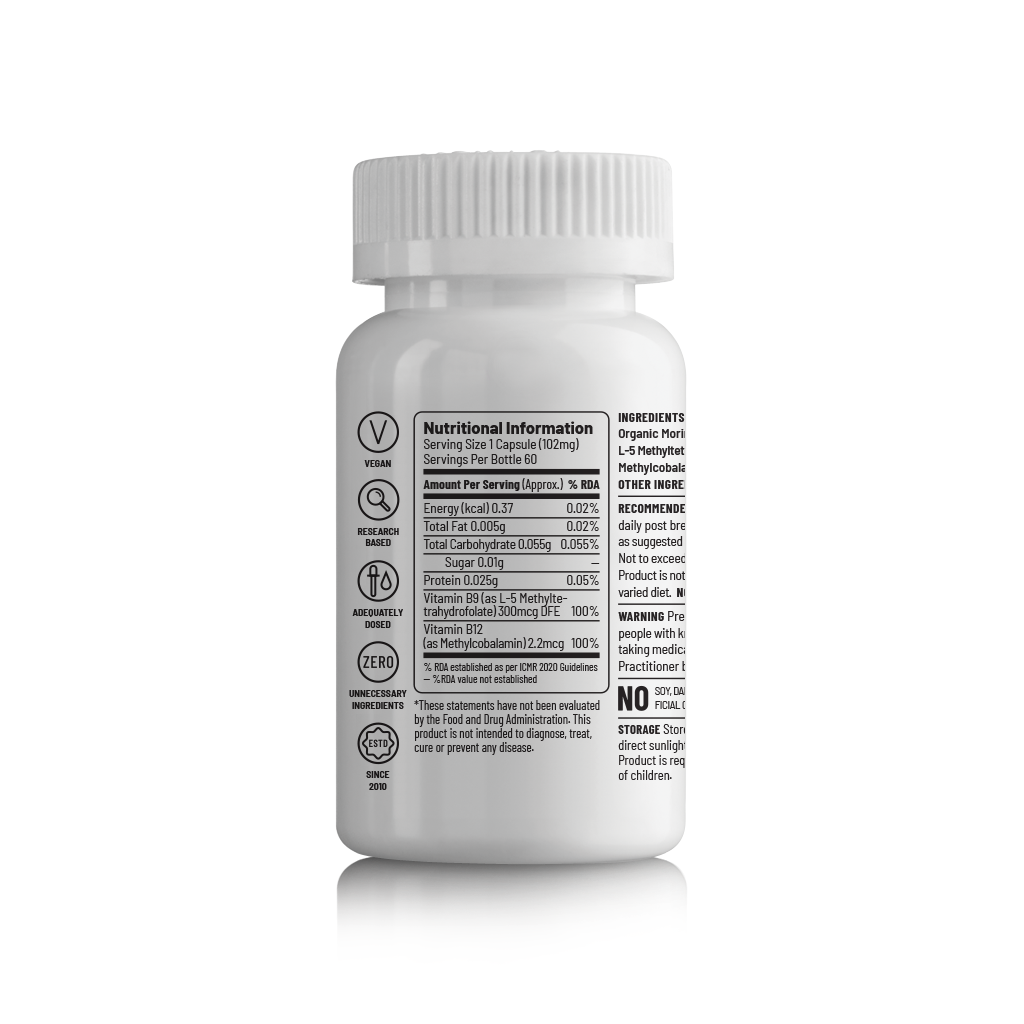
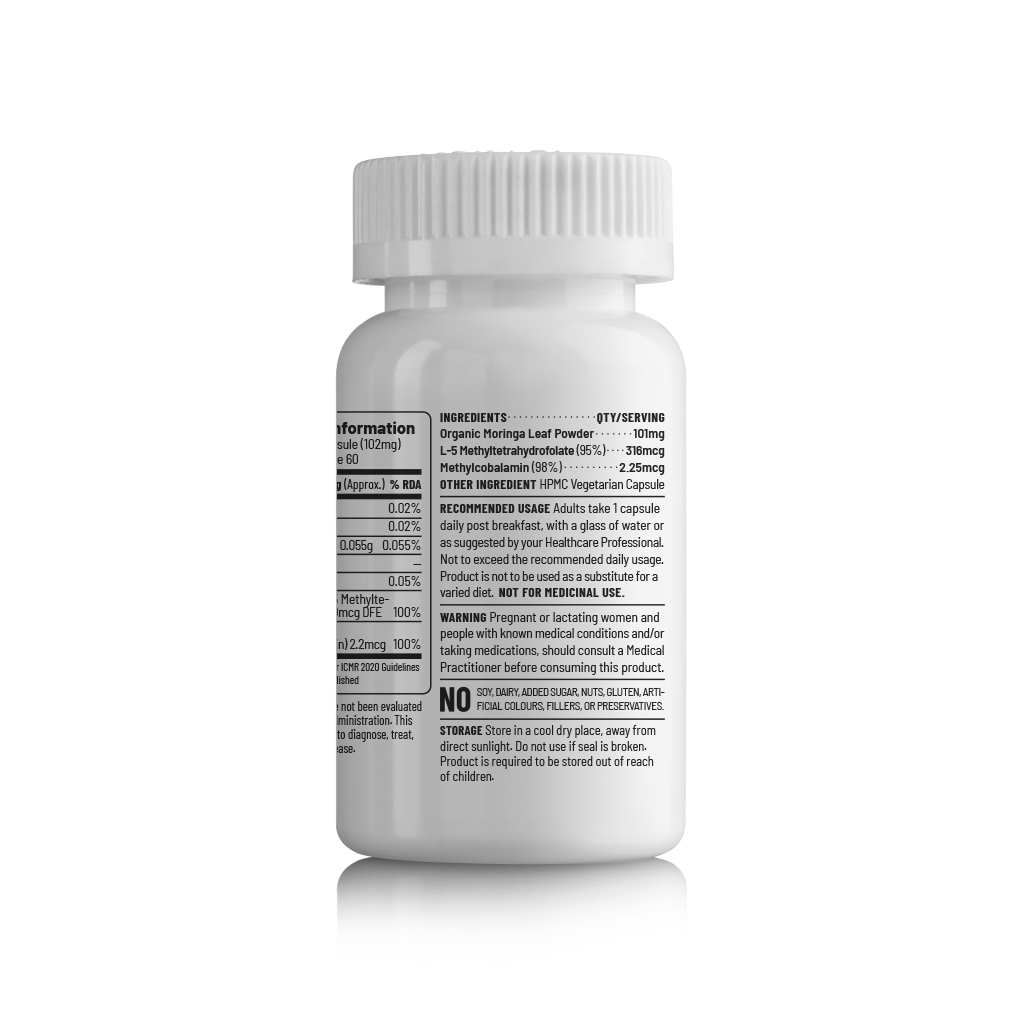
Same formulation, different pack sizes and commitment levels. Both contain methylcobalamin B12 (2.2mcg, 100% RDA), L-5-MTHF folate (300mcg DFE, 100% RDA), and 101mg organic moringa leaf powder per capsule. Basics B12 + Folate (60 capsules) is the entry-level pack — for adults trying daily supplementation for the first time, or who want to commit one or two months at a time. B12-VEG® (180 capsules) is the larger pack — for adults who have decided this is a long-term daily habit and want a 6-month supply at a lower per-capsule cost. Choose Basics for entry-level commitment; choose B12-VEG® for the long-term habit at lower per-capsule cost.
What's the difference between this and Basics B12 + D3?
Both have the same B12 (2.2mcg methylcobalamin) and folate (300mcg DFE L-5-MTHF) at 100% RDA. The difference is the third ingredient. This product (B12 + Folate) includes 101mg of organic Moringa Leaf Powder — a traditional whole-food nutrient base. B12 + D3 includes 600 IU of Vitashine™ Vitamin D3 instead — for adults who want B12, folate, and D3 in one capsule. Choose B12 + Folate if you handle your Vitamin D separately, don't need D3 supplementation (already adequate), or prefer the whole-food moringa base. Choose B12 + D3 if you want all three core vegan-relevant nutrients in one capsule.
Why methylcobalamin instead of cyanocobalamin?
Cyanocobalamin is the cheapest, most shelf-stable form of B12 — it's what most multivitamins use. The body has to convert it into methylcobalamin (the active form) before it can be used. Most healthy adults convert efficiently; older adults, smokers, and people with certain genetic variants don't convert as well. Methylcobalamin is the form your body actually uses — supplementing it directly skips the conversion step. It also crosses the blood-brain barrier more readily, which matters for adults specifically supporting neurological function.
Why L-5-MTHF instead of folic acid?
Same logic as B12. Folic acid is the cheap synthetic form found in most fortified foods and supplements; the body has to convert it through the MTHFR enzyme. Up to 40% of populations carry MTHFR gene variants (C677T or A1298C) that limit conversion efficiency. These individuals get less benefit from folic acid and may even accumulate unmetabolised folic acid in their bloodstream. L-5-MTHF is the form the body uses directly — bypasses the conversion step entirely. Particularly relevant for women planning pregnancy, adults with known MTHFR variants, and anyone on long-term folic acid supplementation who hasn't seen the benefit expected.
What does Basics mean — is this lower quality than the standard range?
No. Basics is Unived's entry-level pack-size range — same ingredient quality, same active forms, same patented inputs, smaller pack for lower upfront commitment. The active forms (methylcobalamin, L-5-MTHF) are preserved at the Basics tier. The choice between Basics and the standard range is about pack size and per-capsule economics, not formulation quality. Most "entry-level" supplements in the market downgrade form (cyanocobalamin instead of methylcobalamin, folic acid instead of L-5-MTHF) to hit a lower price. Unived Basics preserves the forms and reduces pack size instead.
Is the folate inclusion enough for pregnancy?
Likely not on its own — speak with your gynaecologist. Pregnancy folate requirements rise to 600mcg DFE daily in the first trimester (or higher per medical advice). This product contributes 300mcg DFE — half the pregnancy requirement. Your physician may recommend dedicated prenatal folate supplementation alongside or instead of this product during pregnancy.
What is moringa, and why is it in this product?
Moringa (Moringa oleifera) is a leaf vegetable recognised in traditional Indian nutritional medicine — known as sahjan or drumstick in many Indian households. The leaf powder is a whole-food nutrient base containing additional B-vitamins, vitamins A, C, E, and K, iron, calcium, magnesium, and a complete amino acid profile. The 101mg dose is modest — it's not a high-dose moringa supplement — but it anchors the product in a whole-food tradition rather than positioning it as a purely synthetic formulation. The synthetic B12 and folate doses still deliver the targeted nutritional support; the moringa adds whole-food context.
I'm vegetarian, not vegan — do I really need this?
Probably yes — though less critically than full vegans. Eggs and dairy contain some B12, though in lower amounts than meat and fish. Most lacto-ovo vegetarians get some B12 but often not the daily target, particularly if eggs and dairy aren't daily staples. Testing your serum B12 (a simple blood test) is the most reliable way to know your status. The 2.2mcg daily dose is appropriate maintenance even for vegetarians who eat eggs and dairy regularly — it ensures the daily target is met without depending on dietary variability.
How long should I take this before I see results?
Depends on what you're measuring. Blood markers (serum B12, MMA, homocysteine, folate) improve at measurable levels within 6–8 weeks of consistent daily use. Felt effects — energy, mood, mental clarity — vary widely by individual. Adults who were genuinely deficient often report noticeable improvement within 2–4 weeks; adults who were sub-deficient or already adequate may not feel any subjective change because the product is acting as maintenance, not correction. Get a baseline blood panel before starting if you want to actually measure the change.
Can I take this if I'm on metformin?
Yes — and many physicians actively recommend B12 supplementation for long-term metformin users. Metformin depletes B12 over time through reduced absorption from food, and B12 deficiency is a recognised side effect of multi-year metformin use. The 2.2mcg daily dose helps offset that depletion. Mention to your physician as supportive information; no interaction with diabetes management.