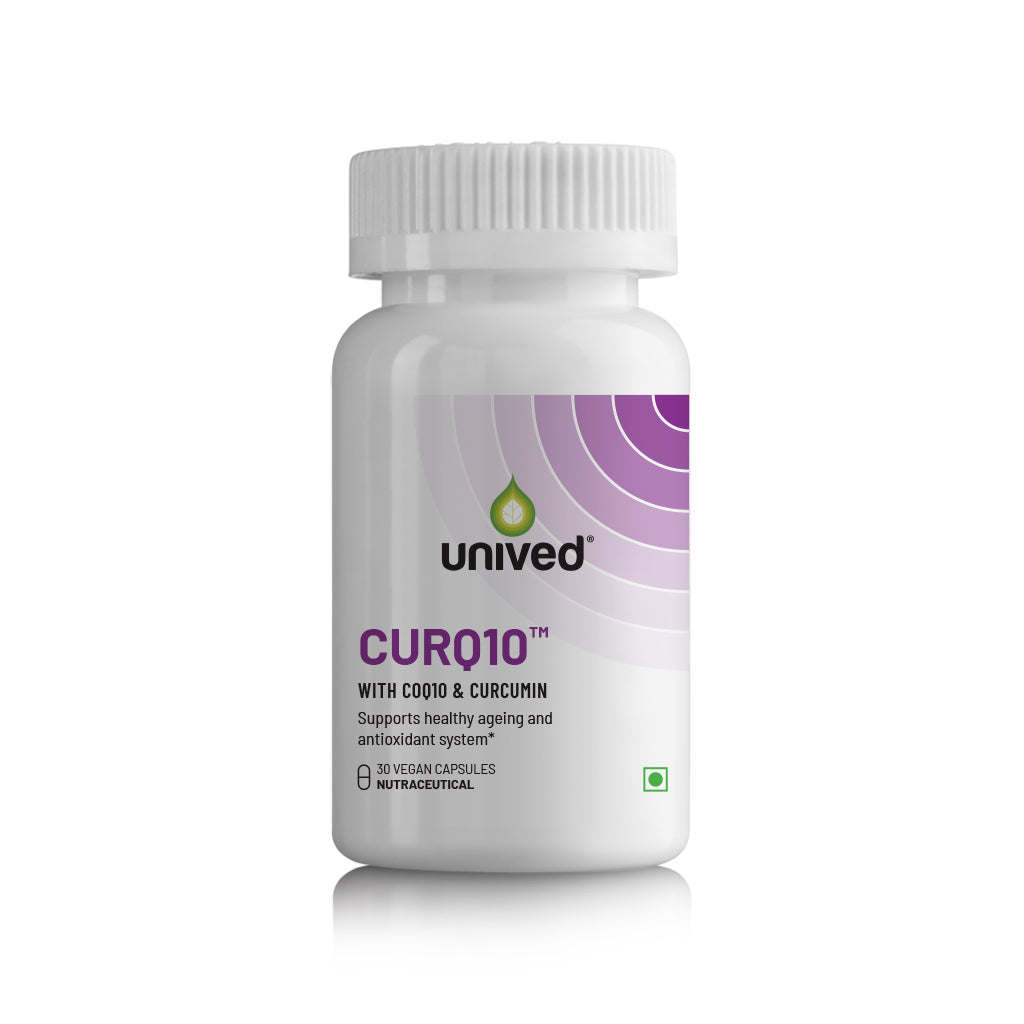
What is CURQ10 and what does the combination do?
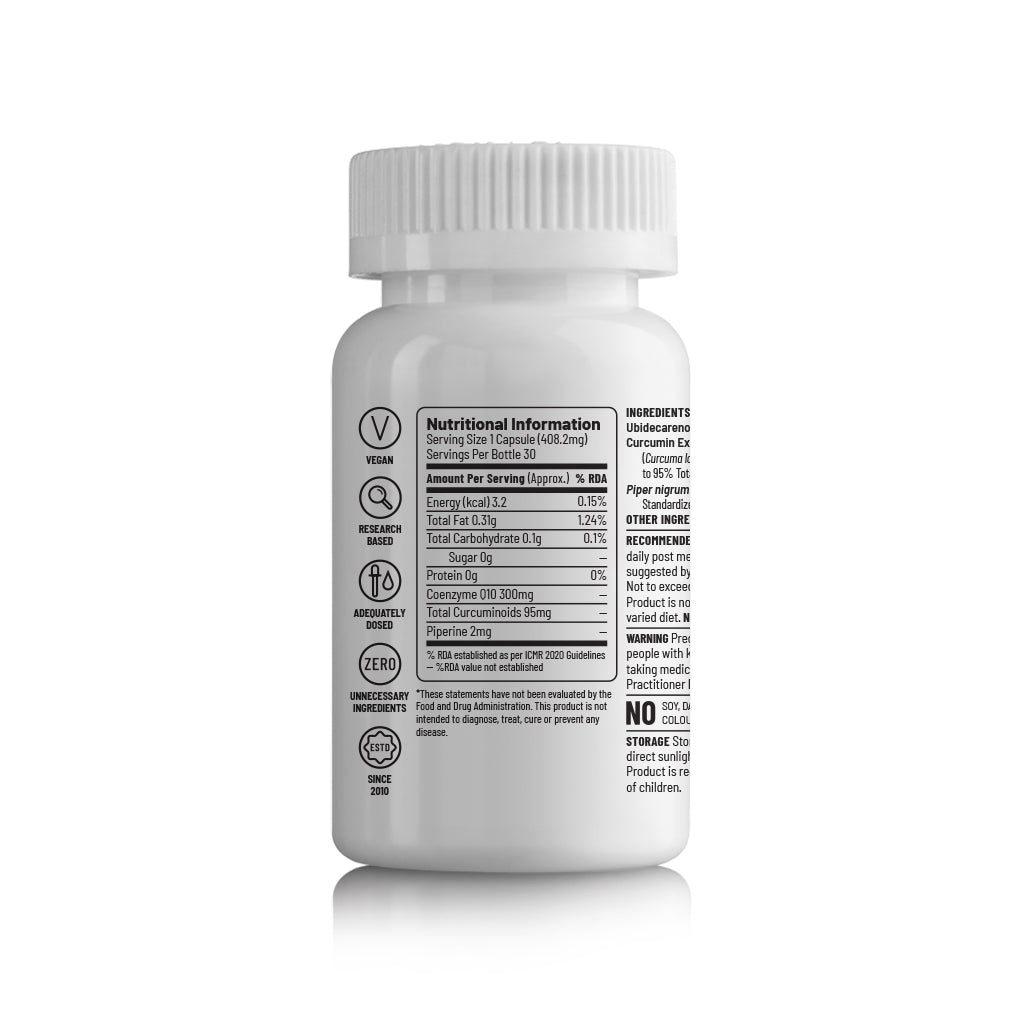
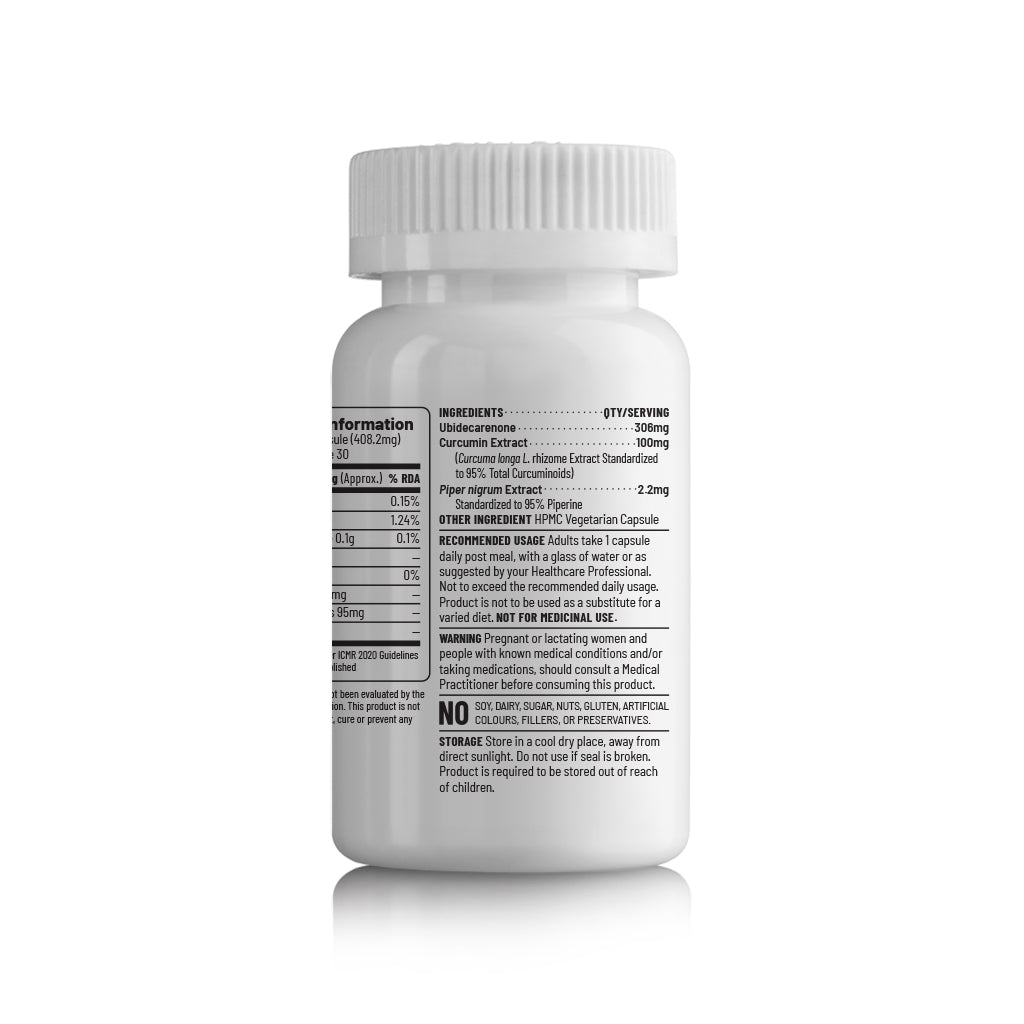
CURQ10 pairs three ingredients with complementary mechanisms: CoQ10 (Ubidecarenone) at 306mg supports mitochondrial electron transport and acts as a fat-soluble antioxidant; Curcumin extract at 100mg (95% curcuminoids) contributes antioxidant and anti-inflammatory polyphenol activity; and Piperine at 2.2mg (95%
standardized) is present specifically to enhance curcumin absorption by inhibiting its rapid intestinal metabolism. Together they address mitochondrial energy support and cellular antioxidant defence with bioavailability built into the formulation.
What is CoQ10 and why does the body need it?
Coenzyme Q10 (Ubidecarenone) is a fat-soluble compound produced by every cell in the body. Its primary role is as an electron carrier in the mitochondrial respiratory chain — specifically shuttling electrons between Complexes I/II and Complex III — which is essential for oxidative phosphorylation and ATP synthesis. Without adequate CoQ10, this process is less efficient. CoQ10 also functions as a potent antioxidant within cell membranes and lipoproteins, protecting against oxidative damage.
Why does CoQ10 decline with age?
Endogenous CoQ10 synthesis uses the mevalonate pathway, the same pathway as cholesterol synthesis. Synthesis peaks in the mid-twenties and declines progressively — measurably so by the mid-thirties. Tissue CoQ10 concentrations in the heart and skeletal muscle fall with age. This is the primary physiological reason adults supplement CoQ10, particularly as mitochondrial efficiency also declines as part of normal ageing.
What does curcumin do and why does it need Piperine?
Curcumin is the primary bioactive polyphenol in turmeric (Curcuma longa). It has well-documented antioxidant properties and is one of the more studied plant compounds. Its core problem is bioavailability: curcumin is rapidly metabolised in the intestinal wall and liver via glucuronidation and sulfation, meaning very little reaches systemic circulation when taken alone. Piperine from black pepper inhibits these metabolic pathways, significantly increasing how much curcumin is absorbed and how long it stays in circulation. This is why any credible curcumin supplement should include a bioavailability enhancer — and why the form of that enhancer matters.
Why is Piperine standardized to 95%?
Standardization ensures the Piper nigrum extract delivers a consistent, known concentration of Piperine — thespecific compound responsible for bioavailability enhancement — rather than varying amounts of crude black pepper powder. 95% standardization means 95% of the extract by weight is Piperine. This is the difference between a functional ingredient and a label claim.
Why take it post-meal?
Both CoQ10 and curcumin are lipophilic — they require dietary fat for proper intestinal absorption. Eating triggers bile secretion, which helps form micelles that solubilise fat-soluble compounds in the intestine. Taking CURQ10 with a fat-containing meal significantly increases absorption of both actives. This is not an optional recommendation — it has a measurable impact on bioavailability.
I take a statin. Is CoQ10 relevant for me?
Yes — and this is one of the best-documented use cases for CoQ10 supplementation. Statins work by inhibiting HMG-CoA reductase, which is also required for CoQ10 biosynthesis as a downstream product of the same pathway. CoQ10 levels can fall with statin use. Whether supplementation addresses statin-related symptoms is something to discuss with your physician, who should guide dose and monitoring.
What is the difference between Ubiquinone and Ubiquinol?
Ubiquinone (CoQ10 oxidised form, sold as Ubidecarenone) and Ubiquinol (CoQ10 reduced form) are two states of the same molecule. In healthy adults, ubiquinone is readily converted to ubiquinol within cells — this is a normal part of the redox cycle CoQ10 performs. Ubiquinol products argue they skip the conversion step. CURQ10 uses Ubidecarenone, which has decades of research behind it and is well-absorbed when taken with food at an adequate dose. For older adults or those with significant cardiovascular concerns, a practitioner may suggest ubiquinol — that is a conversation for your doctor, not a marketing decision.
Are there any drug interactions to be aware of?
Yes — Piperine inhibits CYP3A4 and P-glycoprotein, enzyme systems involved in metabolising many prescription medications. This means it can increase the blood levels of certain drugs. If you take regular prescription medications — particularly for blood pressure, blood thinning, epilepsy, immunosuppression, or
heart conditions — consult your physician before taking any Piperine-containing supplement.
Is it vegan and allergen-free?
Yes. All three active ingredients and the HPMC capsule are vegan. The product is free from soy, dairy, sugar, nuts, gluten, artificial colours, fillers, and preservatives.