How is natural caffeine different from the caffeine in pre-workout supplements?
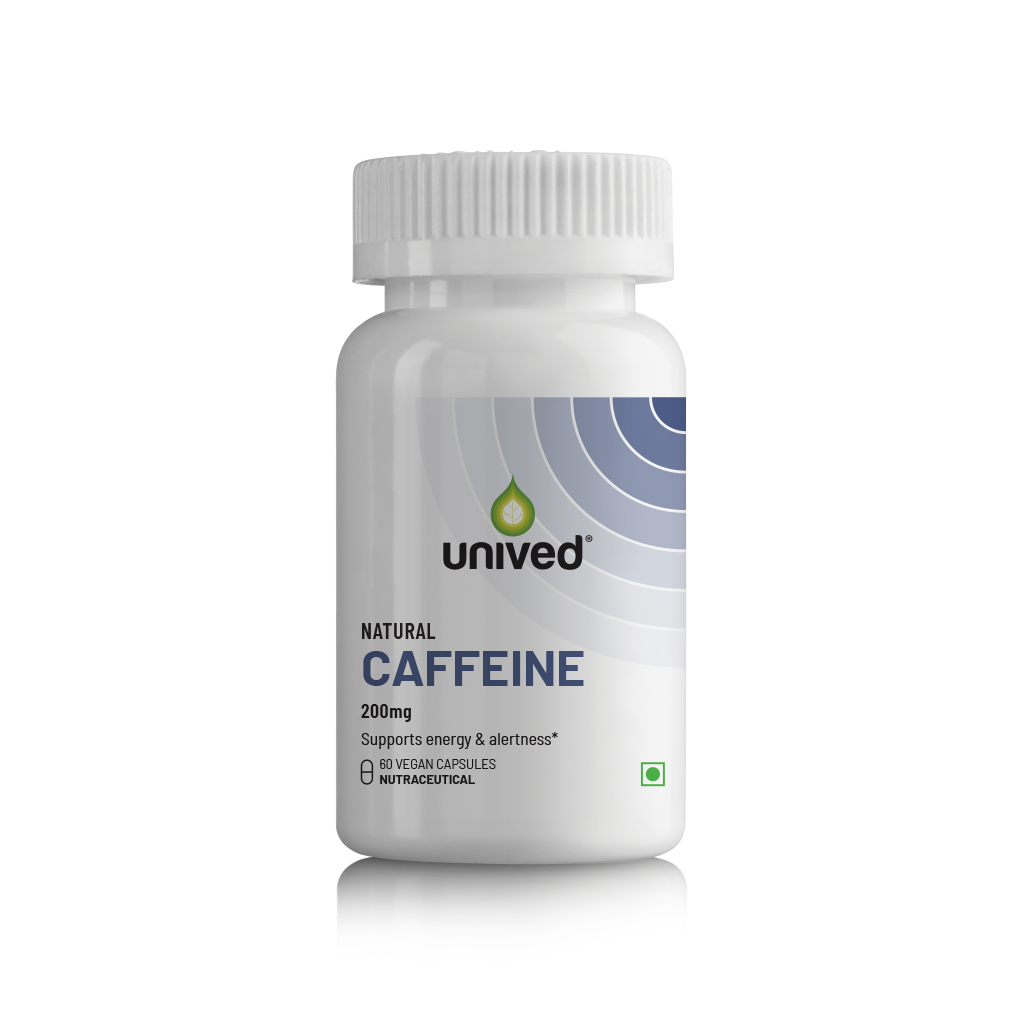
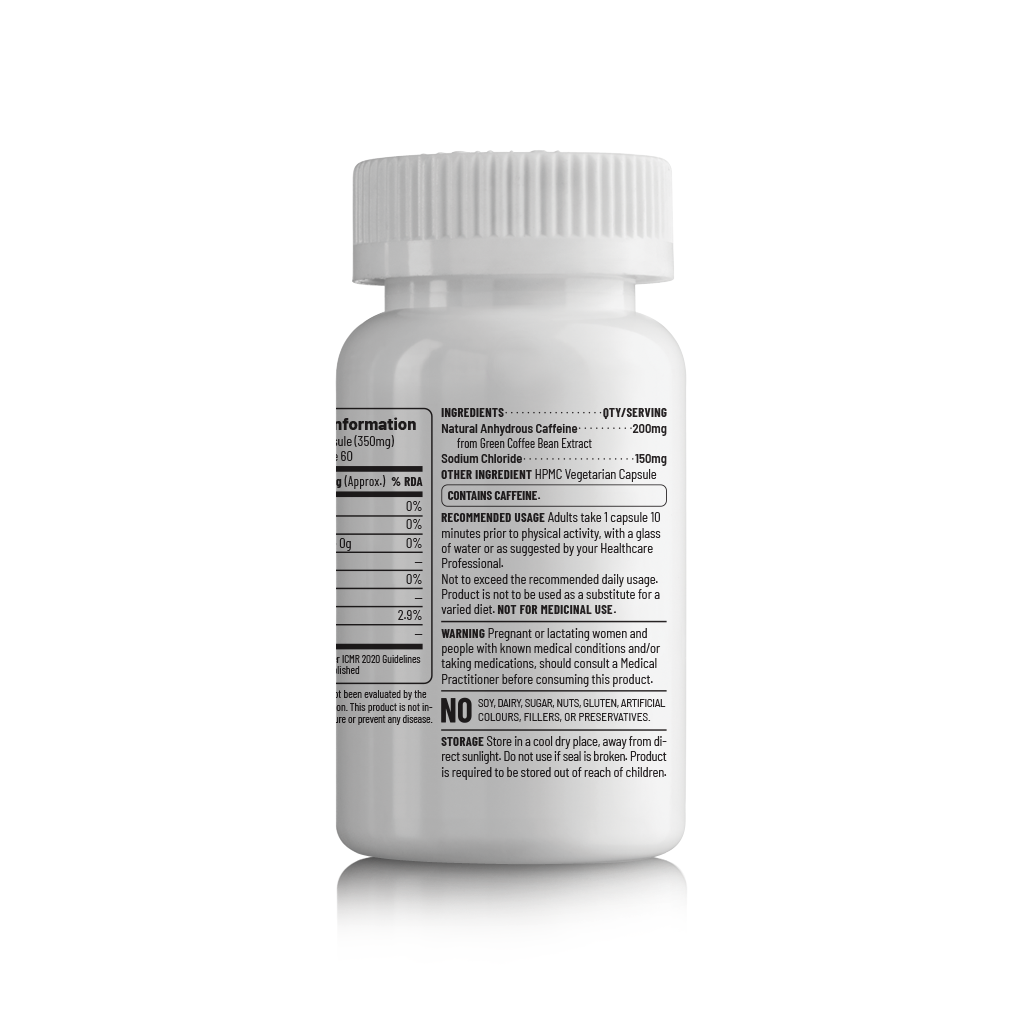
Most pre-workout products use synthetic anhydrous caffeine produced via chemical synthesis. Unived uses natural anhydrous caffeine isolated from green coffee bean (Coffea arabica) — chemically identical once purified, but plant-derived and produced without synthetic petrochemical precursors. Many pre-workouts also
combine caffeine with undisclosed doses of additional stimulants (synephrine, yohimbine, beta-phenylethylamine) in proprietary blends. This formulation contains two clearly disclosed ingredients only.
Why is sodium chloride included in a caffeine supplement?
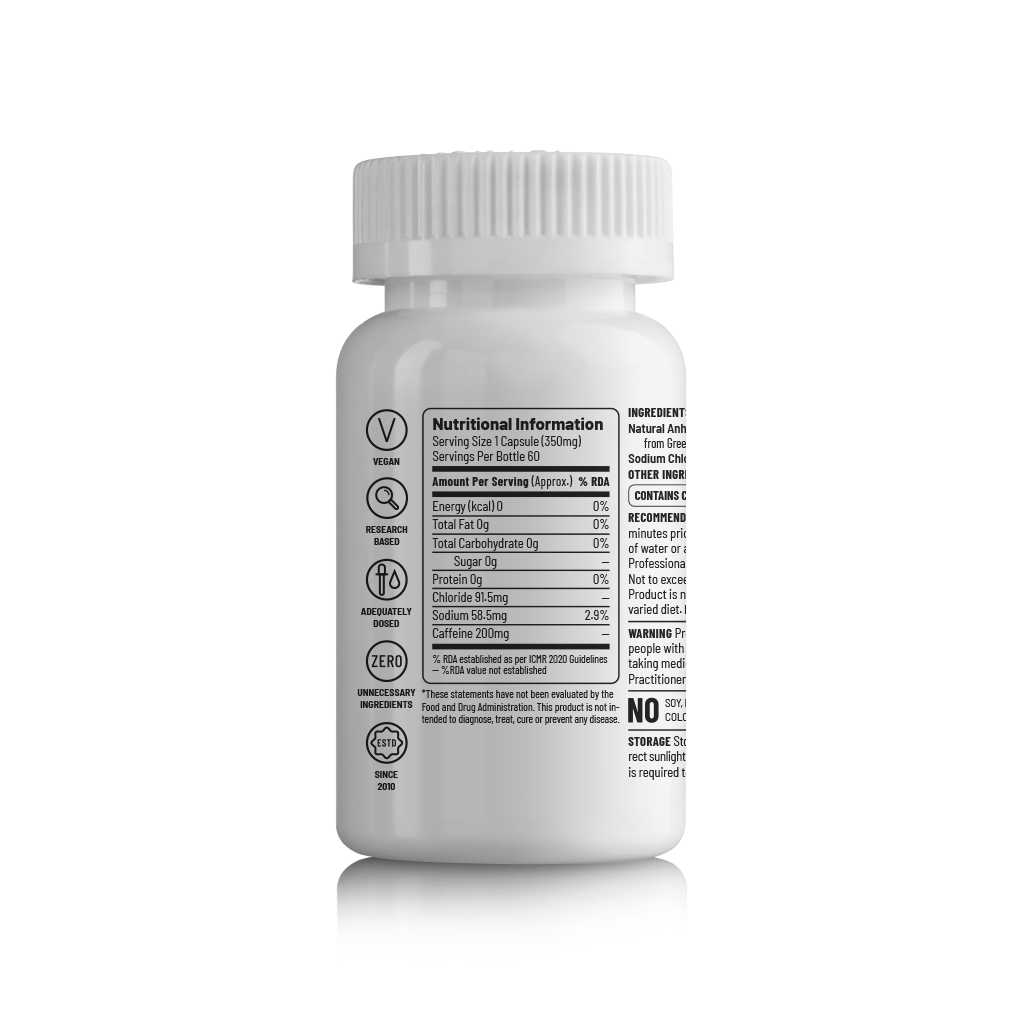
Sodium chloride provides 58.5mg elemental sodium and 91.5mg chloride per capsule. During exercise — especially in warm or humid conditions — sodium is lost through sweat and is the primary electrolyte governing plasma osmolality and fluid balance. Including a small sodium dose pre-activity primes electrolyte status before losses begin, complementing caffeine's performance effects. It is a deliberate functional addition, not a filler
Is 200mg caffeine safe?
For healthy adults without cardiovascular conditions or caffeine sensitivity, 200mg is a standard, well-studied caffeine dose used extensively in exercise science research. EFSA establishes ≤400mg/day as the habitually safe intake for healthy adults, and identifies single doses of ≤200mg as safe even pre-exercise. That said, individual caffeine sensitivity varies significantly — first-time users or those with high sensitivity should start with half a capsule or use the 100mg Caffeine + L-Theanine formulation, which provides a lower caffeine dose with anxiolytic modulation.
What is the difference between this and the Caffeine + L-Theanine product?
This product is pure caffeine — 200mg per capsule with sodium chloride for electrolyte support. It provides the full stimulant effect of caffeine without attenuation. The Caffeine + L-Theanine product provides 100mg caffeine + 200mg L-theanine in the 1:2 ratio — a lower caffeine dose with anxiolytic modulation from L-theanine to reduce jitteriness and anxiety. Use this product if you want the full ergogenic caffeine dose and tolerate caffeine well. Use the Caffeine + L-Theanine formulation if you prefer a lower dose with a smoother stimulant profile.
What is the ergogenic dose of caffeine for exercise performance?
The International Society of Sports Nutrition (ISSN) and published meta-analyses identify 3–6mg/kg bodyweight as the evidence-supported ergogenic range for caffeine in exercise. For a 65kg individual, 200mg = 3.1mg/kg; for a 70kg individual, 200mg = 2.9mg/kg. This places 200mg within the lower-to-middle effective range for most adult athletes — sufficient for meaningful performance support without the high-dose side effects (severe jitteriness, GI disturbance, cardiovascular strain) seen at 6mg/kg+.
Can I combine this with the Caffeine + L-Theanine capsule for a higher dose?
No — combining both products would result in 300mg caffeine total, which approaches the upper end of the EFSA single-dose safety guidance (200mg) and significantly increases side-effect risk for most individuals. If 200mg is insufficient, assess tolerance on this product alone first. Stacking caffeine products is not
recommended without specific guidance from a sports medicine practitioner.
Is this product suitable for competitive sport?
Yes. Caffeine is not on the WADA Prohibited Substance List and is not restricted for competitive use in any WADA-governed sport. Caffeine was removed from the WADA Monitoring Programme in 2004 and has not been re-added. This product contains only caffeine and sodium chloride — no banned stimulants, no diuretics, no anabolic agents.
How does caffeine affect sleep?
Caffeine has an average half-life of 4–6 hours in healthy adults, though significant individual variation exists driven by CYP1A2 genetic polymorphisms — slow metabolisers may have half-lives exceeding 9 hours. Even sub-threshold blood levels can disrupt sleep architecture (reduce deep sleep) without causing obvious difficulty falling asleep. To minimise sleep disruption, avoid taking this product within 6 hours of intended sleep. For afternoon training, assess your individual CYP1A2 response.