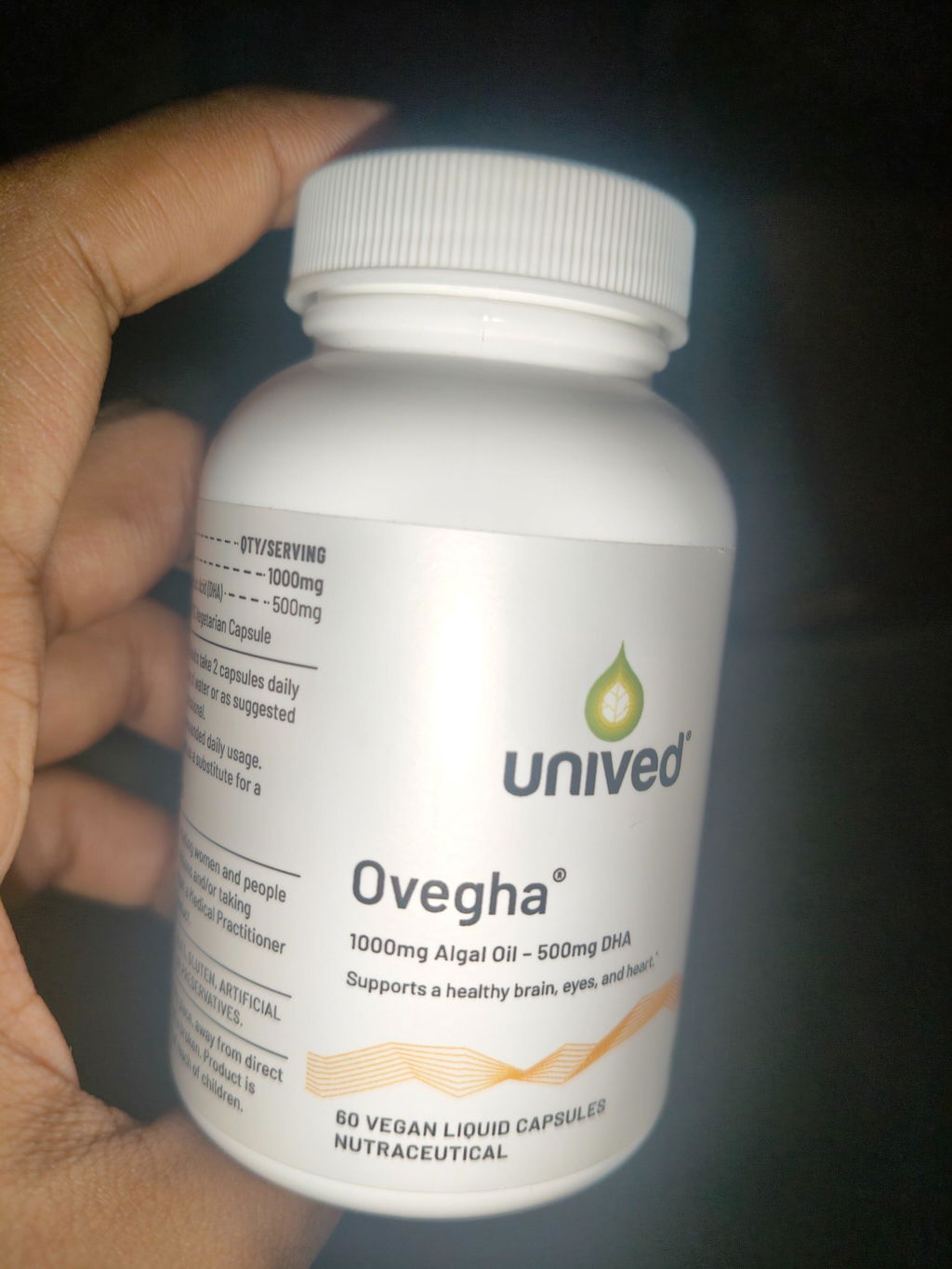
Why algae-sourced rather than fish oil?
Fish accumulate omega-3 by eating algae — algae is the original source. Algae-sourced omega-3 is vegan, environmentally lower-impact (no fish farming or wild-catch), and avoids the mercury, PCBs, and dioxins that accumulate up the food chain in fish-derived oils. The DHA molecule itself is identical to what you'd get from fish; only the source is different.
Is DHA-only as good as a DHA + EPA blend?
Depends on what you're targeting. DHA is the dominant omega-3 in brain tissue and the retina — for cognitive and eye health, DHA is the more directly relevant fatty acid. EPA has stronger evidence for cardiovascular and anti-inflammatory effects specifically. For general daily support, either works because the body can convert small amounts of DHA to EPA. For specific cardiovascular protocols (typically requiring 2g+ EPA daily), a higher-EPA formulation may be preferable — speak to your physician.
How much DHA do I actually need per day?
General health guidelines suggest 250–500mg combined EPA + DHA daily for adult maintenance. The 500mg DHA in Ovegha® meets that target for adults with no dietary fish intake. Higher intakes (1g+) have been studied for specific cardiovascular and cognitive protocols. Vegetarian and vegan adults often need supplemental omega-3 because plant-source ALA (the omega-3 in flaxseed, walnuts, chia) converts to DHA at only 0.5–5% efficiency — supplementation provides what conversion can't.
When is the best time to take Ovegha®?
Post dinner — with your largest meal of the day. DHA is fat-soluble and absorbs significantly better when consumed alongside dietary fat. Evening dosing also avoids competing with morning supplements (multivitamins, B-vitamins) for digestive bandwidth. Timing within the day matters less than consistency across weeks; the omega-3 index improves gradually over 8–12 weeks of consistent daily intake.
I take fish oil already. Can I switch to this?
Yes — and the switch is straightforward. The DHA itself is identical at the molecular level whether sourced from fish or algae. Many users notice algae-sourced omega-3 has no fish-related aftertaste or burps, which is the most common reason people abandon fish oil. The omega-3 index continues building uninterrupted across the switch.
Can I take this during pregnancy and breastfeeding?
Yes, and many physicians actively recommend DHA supplementation during pregnancy and lactation. DHA is critical for foetal brain and visual development, and breast milk DHA content reflects maternal intake. The 500mg dose is appropriate for most pregnant or lactating women, but confirm total daily intake with your gynaecologist — some prenatal vitamins already contain DHA.
Are there any prescription medication interactions?
The most relevant interaction is with anticoagulants. DHA at higher doses can mildly influence platelet function — at the 500mg level this is rarely clinically significant, but if you are on warfarin, aspirin, clopidogrel, or other blood-thinning medication, inform your physician before starting. Otherwise, no significant interactions with common medications (statins, blood pressure medication, thyroid medication).
How long before I see results?
Omega-3 supplementation works slowly. The omega-3 index — the standard blood marker — improves measurably over 8–12 weeks of consistent intake. Effects on inflammatory markers and triglycerides typically show up in the same window. Cognitive and cardiovascular benefits accrue over months to years of sustained intake. Felt effects are not reliable indicators of omega-3 status — the blood test is. This is not a quick-fix product; it builds an underlying nutritional foundation over time.
What's in the other 500mg of the algal oil if only 500mg is DHA?
Algal oil is 50% DHA by composition. The remaining 500mg is the natural composition of the algal oil base — primarily other polyunsaturated and monounsaturated fatty acids that algae naturally produce. These don't contribute additional DHA but are part of the unrefined whole-oil delivery that supports DHA's absorption and stability in capsule form.
Can I verify the batch tested?
Yes. Every batch number printed on the packaging links directly to the Certificate of Analysis published on this product page. Click View Certificate of Analysis in the price panel above to download the COA for the current batch.