Q1. Is a plant protein really as good as whey?
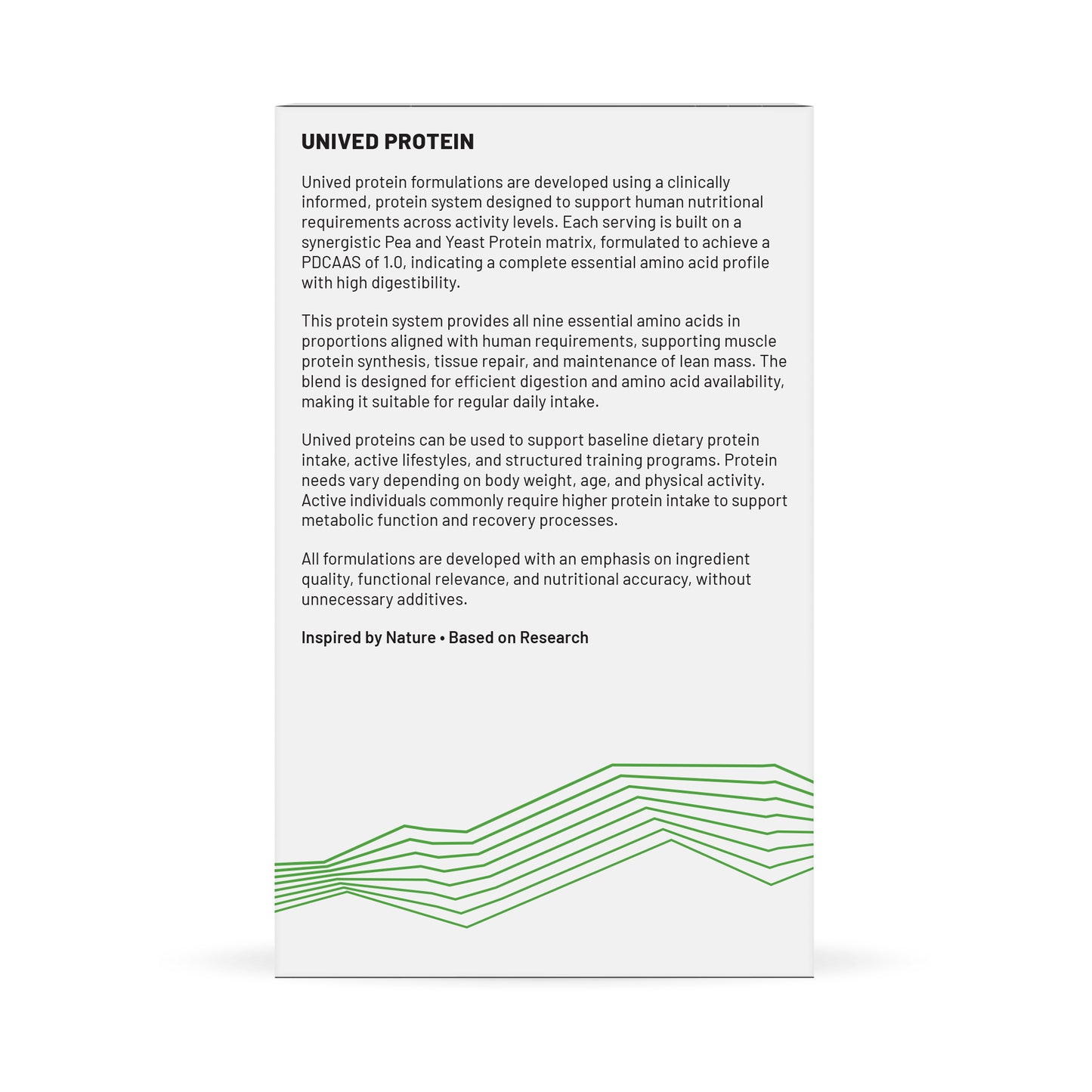
For completeness, yes. This one scores a PDCAAS of 1.0 — the same top rating as whey — because it delivers all nine essential amino acids in the amounts your body needs, including 2.5 g of leucine to drive muscle protein synthesis. It was specifically engineered to match whey's amino-acid completeness and bioavailability, using plants instead of dairy.
Q2. Why is it made from both pea and yeast?
Because neither is complete on its own in the ideal ratio — pea protein is naturally low in methionine. Pairing pea with yeast protein fills that gap, so the finished blend has a complete amino profile and hits PDCAAS 1.0. It's a deliberate dual-source design, not just two proteins mixed together.
Q3. Will it bloat me like other plant proteins?
Much less so, by design. Plant proteins are harder to digest, which is what causes the bloating people associate with them. This formula has a built-in six-enzyme matrix (proteases, amylase, glucoamylase, phytase and alpha-galactosidase) that supports breakdown and absorption, so a 30 g dose sits more comfortably.
Q4. It's unflavoured — how am I meant to use it?
That's the point — you decide. With no added sweeteners or flavours, you can blend it into a fruit smoothie, stir it into oats or coffee, or bake with it, and control the taste and sweetness yourself. It also means the cleanest possible ingredient list: just protein and enzymes.
Q5. How much should I take, and how many scoops a day?
One scoop gives 30 g of protein. A practical daily target is around 1.5 g of protein per kg of body weight if you're active, and up to 2 g per kg if you're an athlete — so most people use one to two scoops a day and get the rest from food. Spread your protein across the day rather than taking it all at once.
Q6. When's the best time to take it?
Any time that helps you reach your daily protein target. A serving after training is a good habit because the leucine supports the muscle-repair response, but total daily protein and consistency matter more than exact timing.
Q7. What's actually in it?
Just two things: a pea protein isolate + yeast protein blend, and a digestive-enzyme blend. It's free from soy, dairy, added sugar, nuts, gluten, artificial colours, fillers, emulsifiers and preservatives, and it's fully vegan. It does contain a small amount of naturally occurring sugars (0.8 g).
Q8. Should I choose this or Elite Performance Protein?
Choose Complete Protein for clean, everyday protein and recovery — it's protein and enzymes, nothing else. Choose Elite Performance Protein when you want the same protein base built into a full performance stack: added creatine, electrolytes, beetroot nitrates, taurine and vitamins D3 + K2, in one shake. Same protein quality at the core; different jobs.
Q9. Can non-athletes and older adults use it?
Absolutely. Protein needs aren't just an athlete concern — maintaining muscle matters more with age, and many people simply don't eat enough protein day to day. A clean, complete, easy-to-digest protein is an easy way to top up your baseline intake, whatever your activity level.
Q10. Does it contain any allergens?
No — it's free from soy, dairy, nuts and gluten, and contains no added sugar, artificial colours, fillers, emulsifiers or preservatives. As always, if you have a diagnosed medical condition or a specific allergy concern, check with your practitioner first.