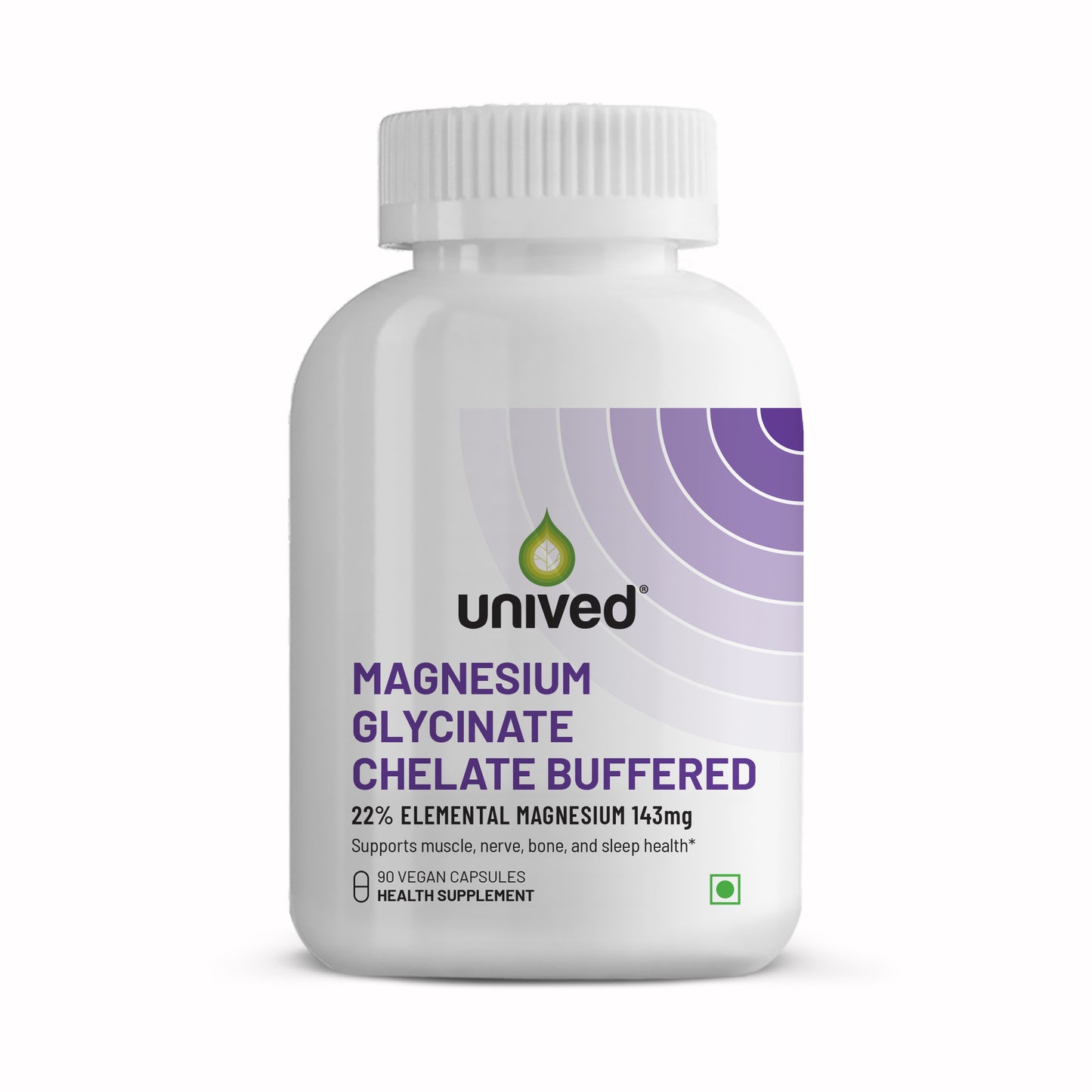
What's the difference between Magnesium Glycinate Pure and Magnesium Glycinate Buffered?
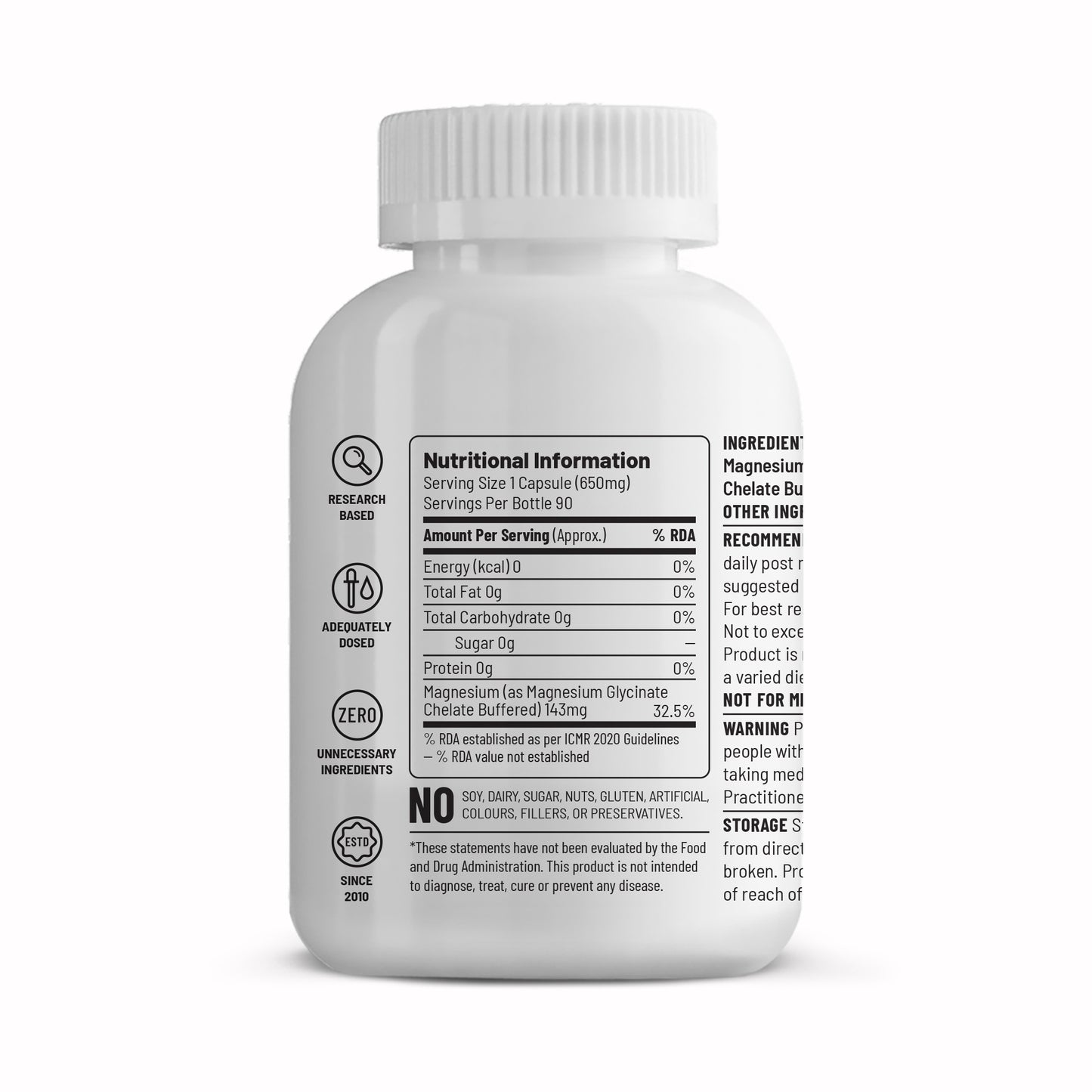
Pure is 100% bisglycinate chelate — the form with the highest absorption per mg and the strongest evidence for sleep, stress, and neuromuscular benefits. It delivers 87.75mg elemental magnesium per capsule (22.8% RDA). Buffered combines bisglycinate with magnesium oxide to deliver a higher elemental dose at a lower cost per mg — 143mg per capsule (32.5% RDA), about 63% more elemental magnesium per capsule. Pure is for adults specifically targeting sleep quality or magnesium absorption. Buffered is for adults wanting effective daily supplementation at higher dose for lower cost — particularly when daily intake adequacy is the priority rather than form purity.
What does "buffered" actually mean?
Buffered magnesium combines bisglycinate chelate with magnesium oxide in a controlled ratio. The oxide raises the overall elemental magnesium content per capsule (oxide is 60% elemental Mg, bisglycinate alone is only 11.7%). The bisglycinate fraction absorbs efficiently and crosses the blood-brain barrier; the oxide fraction adds elemental count at a lower per-mg cost. Net result: more total magnesium per capsule than pure bisglycinate alone, with most of the GI tolerance benefit preserved by the chelated portion. Honest trade-off — you gain dose, you give up a small amount of form purity.
Will the oxide portion cause loose stools or laxative effects?
Generally not at the 1-capsule daily dose. Magnesium oxide can produce laxative effects at higher doses (typically 300mg+ of oxide alone), but the chelate buffering reduces this significantly. Most adults tolerate 1–2 capsules daily without issues. If you experience loose stools at higher daily intakes (3+ capsules), reduce the dose or switch to Magnesium Glycinate Pure, which has the best GI tolerance of any magnesium form.
Why magnesium glycinate over magnesium oxide, citrate, or other forms?
Pure magnesium oxide has ~4% absorption — most passes through unabsorbed and causes laxative effects. Magnesium citrate has better absorption but also laxative effects at therapeutic doses. Magnesium bisglycinate has the highest absorption of any tested form and is the most GI-tolerant — it crosses the blood-brain barrier more readily, supporting sleep and stress modulation where other forms don't. Buffered combines the absorption efficiency of bisglycinate with the elemental yield of oxide, giving a practical middle ground for daily use.
How many capsules should I take per day?
One capsule daily covers maintenance — 32.5% RDA, appropriate for adults whose diet covers most of their magnesium needs (leafy greens, seeds, nuts, dark chocolate). Two capsules daily delivers 65% RDA, appropriate for active adults, those with elevated stress, or those who sweat heavily. Three capsules daily reaches near-RDA — relevant only for adults with documented higher needs and best taken under practitioner guidance. Most adults find one or two capsules per day sufficient.
Will this make me sleepy during the day?
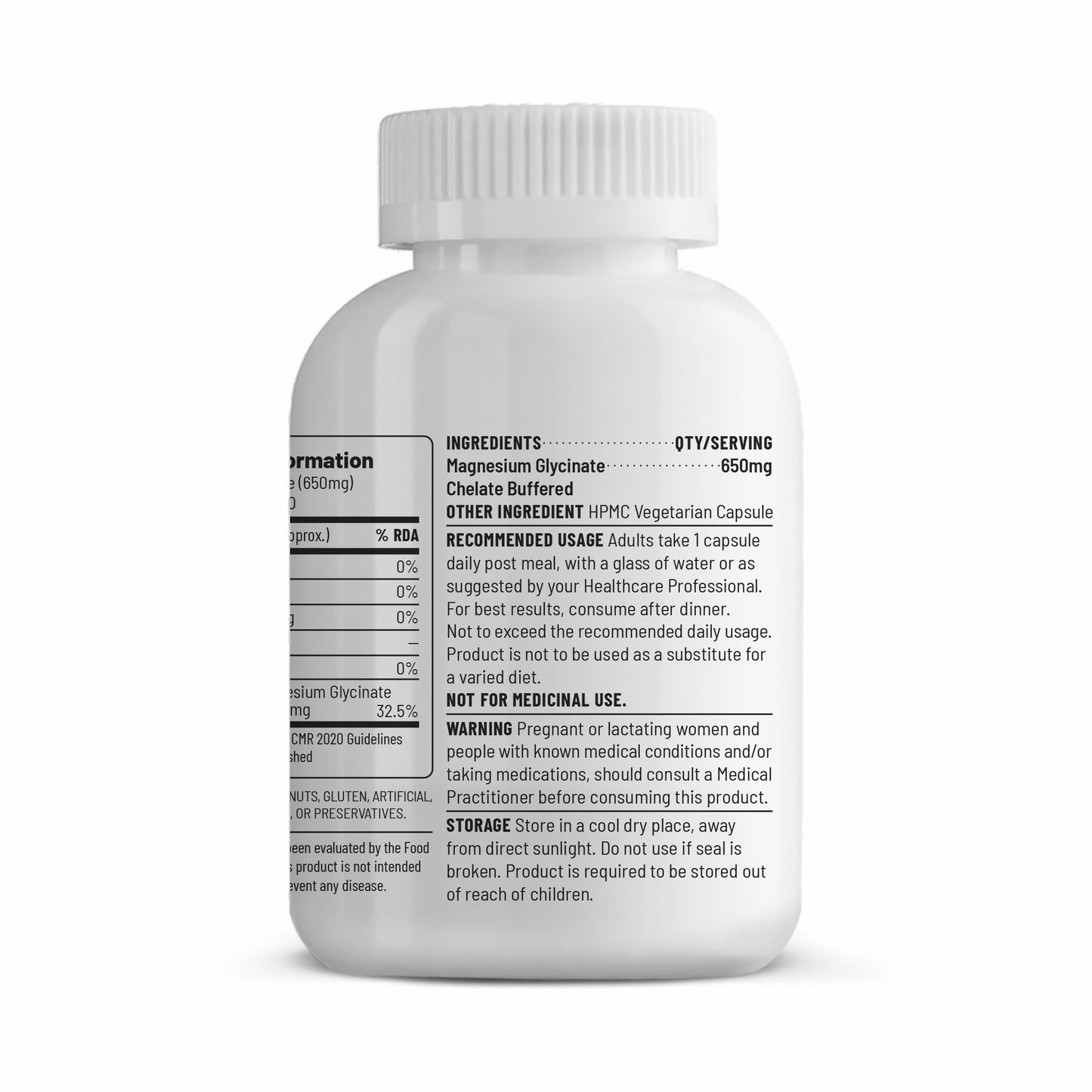
Not at the daily dose. Magnesium doesn't act as a sedative — it supports the body's natural shift toward parasympathetic activity, which is most useful at night. Evening dosing positions it where it does most of its sleep-relevant work. If you take it earlier in the day, you may notice subtle relaxation but not drowsiness in healthy adults.
Can I take this with my evening supplements like melatonin or ashwagandha?
Yes, these complement each other well. Magnesium supports the parasympathetic shift; melatonin signals circadian timing; ashwagandha modulates cortisol. Many adults use all three for comprehensive sleep and stress support. No interactions; just space them 15–30 minutes apart to avoid taking too many capsules at once.
How long before I see results?
Sleep quality improvements typically appear within 1–2 weeks of consistent evening use. Muscle cramping or restless leg patterns reduce in 2–4 weeks for adults with low baseline magnesium. Stress recovery and cardiovascular baseline improvements accrue over 6–8 weeks. Magnesium works cumulatively, so consistency matters more than precision in timing.
Can I take this if I'm on prescription medication?
Generally yes, with some timing considerations. Magnesium can reduce absorption of certain antibiotics (tetracyclines, quinolones) and thyroid medication — take this product at least 2 hours apart from these. May interact with some blood pressure medications, diuretics, and bisphosphonates — confirm with your physician.
Can I verify the batch tested?
Yes. Every batch number printed on the packaging links directly to the Certificate of Analysis published on this product page. Click View Certificate of Analysis in the price panel above to download the COA for the current batch.