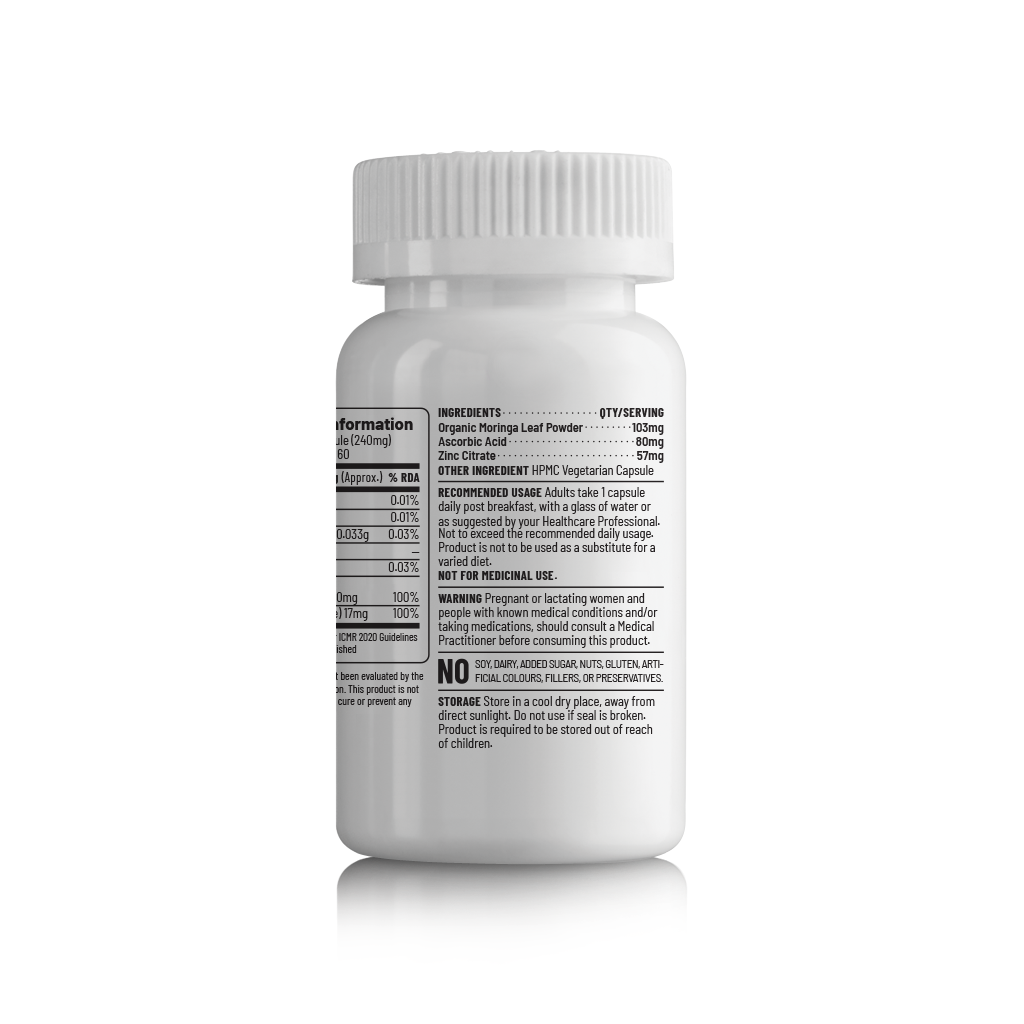
Why zinc citrate instead of zinc oxide or zinc picolinate?
Most zinc supplements use zinc oxide (cheapest, but only ~25% absorption) because it allows manufacturers to claim a high zinc number on the label while delivering less to the body. Zinc citrate has significantly better absorption (~60%+), good GI tolerance, no metallic aftertaste, and a long safety record. Zinc picolinate is well-absorbed but has limited human supplementation data compared to citrate, and the picolinate ligand can compete with other minerals. Zinc citrate is the well-balanced choice — absorption, tolerance, and safety all addressed without compromising on any of them.
Why pair zinc with Vitamin C?
The two nutrients work synergistically for immune function. Zinc is required for over 300 enzymes, including those involved in immune cell development, T-cell function, and antibody production. Vitamin C supports neutrophil function, acts as a water-soluble antioxidant, and is required for collagen synthesis (which matters for skin and mucous membrane barrier function — your first immune defence). Vitamin C also slightly enhances non-heme zinc absorption from the GI tract. Together, they form the classic immune-support pairing — and combining them in one capsule means daily compliance is easier than taking two separate products.
Why is the Vitamin C from ascorbic acid here, when CalDveg® uses amla?
Different formulation choices for different products. Ascorbic acid is the dose-standardised pharmaceutical form of Vitamin C — useful when you want a precise daily dose at exactly 100% RDA. Amla extract is a whole-food source of Vitamin C with natural cofactors (polyphenols, bioflavonoids) but slightly more variable concentration. CalDveg® uses amla because the bone-mineral matrix already emphasises whole-food sources (algae calcium, fermented chickpea K2). This Zinc + Vitamin C product uses ascorbic acid for precise daily dosing alongside the zinc. Both forms work; the choice reflects the editorial direction of each product.
Will this prevent or cure a cold?
Honest answer: not on its own. Daily zinc supplementation at the 17mg maintenance dose supports immune system function broadly, but doesn't dramatically reduce cold frequency in adults already adequate in zinc. Higher-dose zinc started within 24 hours of cold symptoms (typically 30–50mg elemental zinc daily for 4–5 days) has shown modest benefit in some studies — reducing cold duration by about a day. This product isn't formulated for that acute use case; it's calibrated for daily maintenance. For acute cold supplementation, consult your physician about appropriate short-term dosing of a higher-dose product.
I'm vegan or vegetarian — do I really need zinc supplementation?
Probably worth it. Zinc bioavailability from plant sources is lower than from animal sources because plant foods contain phytates (in grains, legumes, nuts) that bind zinc and reduce absorption. Vegans and vegetarians can technically meet zinc RDA from food (chickpeas, lentils, hemp seeds, pumpkin seeds, cashews, tofu), but the absorption efficiency is meaningfully lower than for adults eating animal products. Daily supplementation at the RDA closes this absorption gap. Testing serum zinc (a simple blood test) is the most reliable way to know your status if uncertain.
Can I take this on an empty stomach for better absorption?
Yes — zinc absorbs slightly better on an empty stomach, but most adults experience nausea at that timing. The post-breakfast dosing on the label trades a small absorption efficiency loss for significantly better GI tolerance. If you tolerate zinc well on empty stomach and prefer that for maximum absorption, that's a reasonable choice. If you experience nausea, switch to taking it with food — particularly a meal with some fat and protein, which buffers GI sensitivity.
How does this compare to the zinc in my multivitamin?
Depends on the multivitamin. Most multivitamins include 10–15mg zinc, often as zinc oxide (poor absorption) or as a mixed form. This standalone product delivers 17mg as zinc citrate (well-absorbed) plus 100% RDA Vitamin C and the moringa whole-food base. If your multivitamin uses zinc oxide and you specifically want better absorption — particularly relevant if you're vegan, recovering from illness, or have known zinc-deficiency markers — the standalone product offers an upgrade. If your multivitamin already uses zinc citrate or zinc picolinate, the duplication is unnecessary unless you're targeting a specific higher daily intake. Check your multivitamin label for the zinc form before stacking.
I take iron — when should I take zinc?
Zinc and iron compete for absorption when taken together. For best absorption of both, separate by at least 2 hours. The practical pattern: iron at breakfast, zinc at lunch (or zinc at breakfast and iron at lunch). For menstruating women on Women's Multivitamin & Minerals (which contains iron), the multivitamin is typically taken with breakfast; taking this Zinc + Vitamin C product at lunch maintains absorption efficiency for both nutrients.
Can I take this long-term?
Yes — at the 17mg daily dose, long-term use is safe. The concern with long-term zinc supplementation is copper depletion, which becomes relevant at doses above 40mg daily for extended periods. This product's 17mg dose is well below that threshold. Multiple Unived products contain zinc — Men's and Women's Multivitamins (10–11mg), ZMA (17mg), Essential and Elite Performance Proteins (small amounts). If you stack this standalone product with two or three others, calculate cumulative intake — staying under 40mg total daily from supplements avoids copper depletion concerns.
What is the moringa for?
Moringa (Moringa oleifera) is a leaf vegetable recognised in traditional Indian nutritional medicine — known as sahjan or drumstick in many Indian households. The 103mg moringa leaf powder is a whole-food nutrient base providing additional B-vitamins, iron, calcium, magnesium, and a complete amino acid profile in a small dose. It's not the active ingredient — the zinc and Vitamin C are — but it anchors the product in a whole-food register rather than presenting as a purely synthetic formulation.